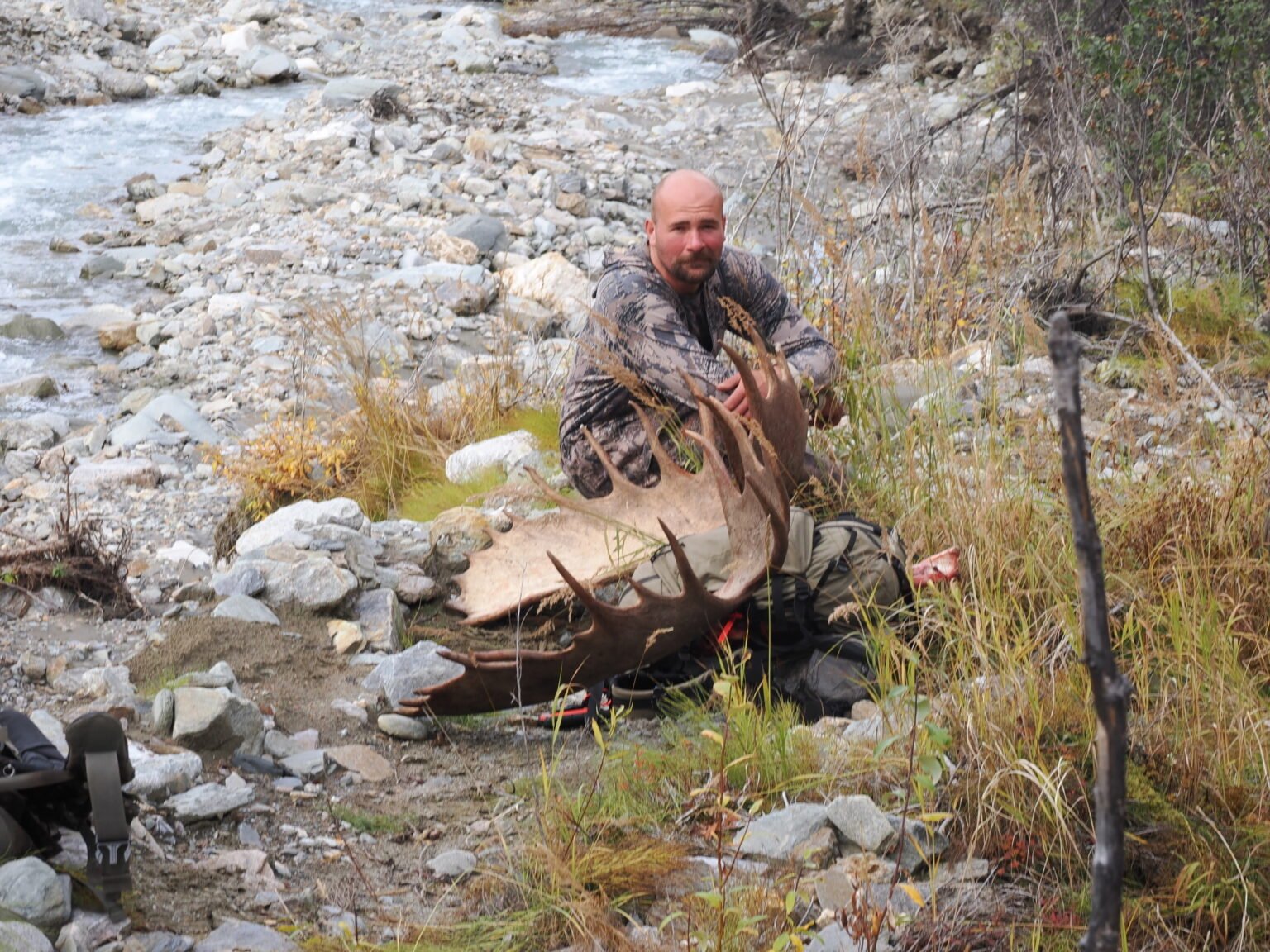
We enjoyed a brief celebration on the creek bank as we loaded the bull into our rafts. The hard part — or so we thought — was behind us. The bull was off the mountain. Our packout had been grueling, but things were generally going as planned.
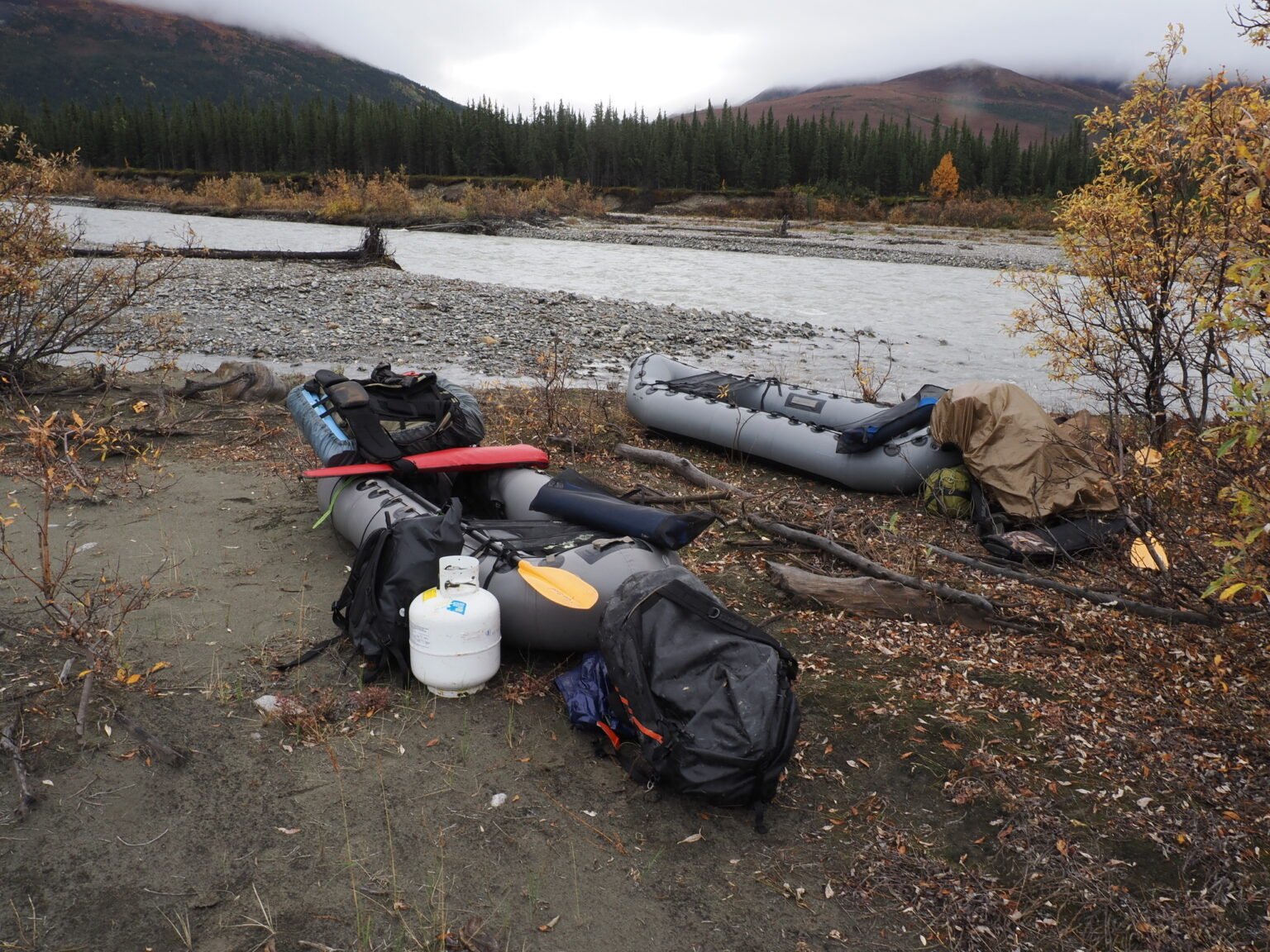
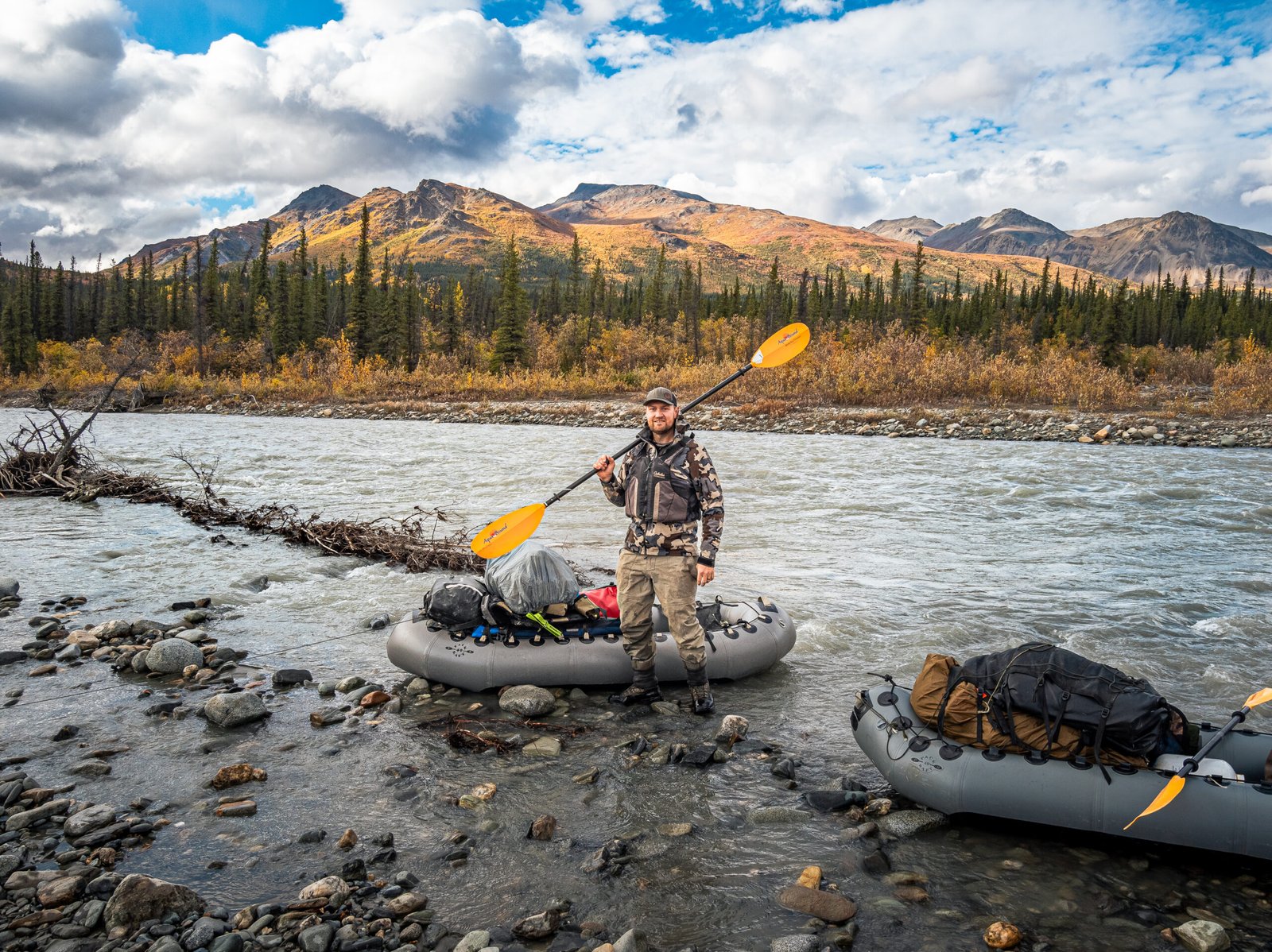
Our PR-49 packrafts sat heavily loaded at the water’s edge. Paracord cinched tight and secured around the bull’s antlers and our gear. We were ready to float the giant bull the rest of the way.
From the ridge above, the creek looked manageable. Now that I was standing beside it, I could see that it was shallow and full of boulders, many hiding just under the surface. The cold, glacially-fed stream seemed faster and more turbulent the longer I stared at it. It was at that moment I had my first real feeling of doubt.
Terry pushed his raft off first.
For a moment, the raft moved cleanly with the current. Suddenly, however, his raft clipped a submerged rock and the boat turned sideways. Water surged over the tubes and flooded the raft faster than it could drain.
Terry stood in knee deep water while he muscled the raft off the boulder, attempting to force the bow back into the current before the boat swamped completely. This scenario repeated itself several times as he struggled through the first 50 yards of the float.
We exchanged glances, but kept moving forward, reassuring each other that it was going to get better just a little farther downstream.
Unfortunately, it didn’t. Not even 50 yards into the float and our plan was already beginning to unravel. With another 4 miles to go to the airstrip, and now concerned with a possibility our packraft plan was not going to work, I started doing math in my head. The results were not good.
The Golden Ticket to My First Bull
“We did it again”
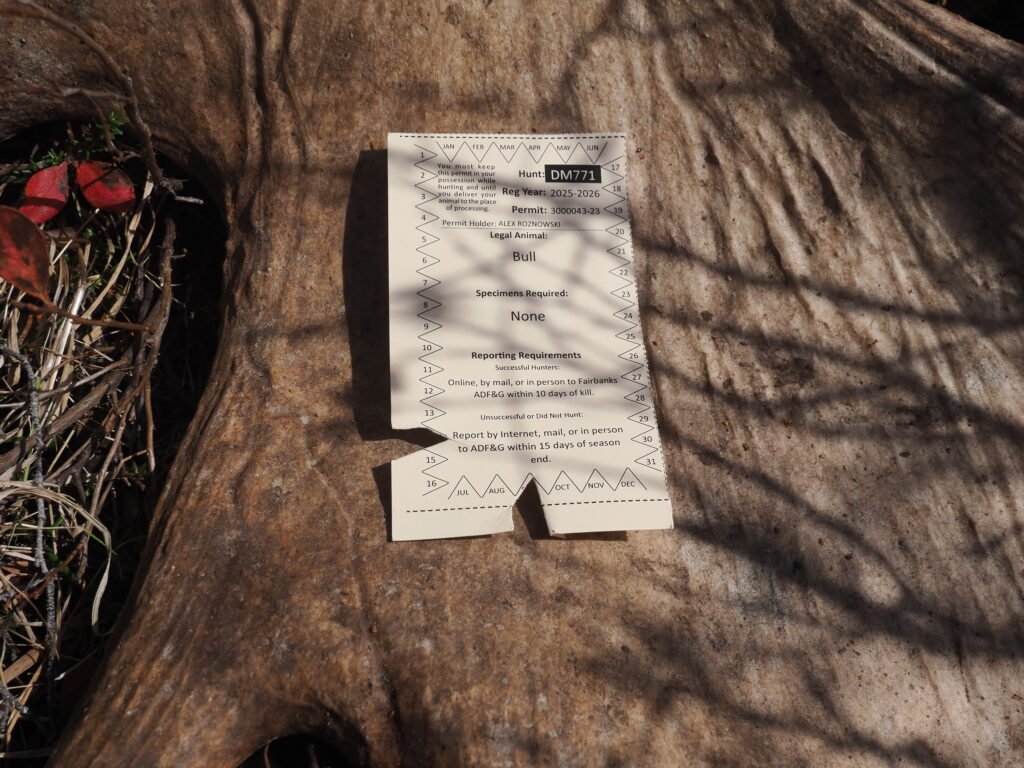
When I sent this text to Terry, he knew it immediately: against the odds, we had drawn another party tag. This time, an “any bull” permit in a popular unit of the Alaska interior known for a healthy moose population.
After a dozen years of hunting big game in Alaska, I was still searching for my first bull moose. An any-bull permit in an area with a historically high success rate and healthy moose population seemed like the golden ticket I’d been waiting for.
In the days following the draw, I began researching transporters working in the area. Of the two I found, only one had an opening remaining. We booked immediately, committing ourselves to an unfamiliar to us, yet seemingly popular airstrip outside Fairbanks.
Hunters holding this permit averaged roughly 55% success for the previous three years. Those were encouraging odds. Although I didn’t want to end my hunt early with a small bull, I was willing to take about any legal animal on this trip. I was also excited to explore a completely new part of the Alaska Range, an area I had been interested in exploring for quite some time.
The initial plan was fairly simple: establish a base camp near the air strip, be patient and let our calling do the work. Our e-scouting revealed several likely vantage points nearby. To the north, two nearly identical creeks paralleled the strip, flowing from their headwaters deep in the mountain valleys to the east and back to their confluence with the main river.
Both valleys looked like they would provide great access to prime moose country.
The proximity to these two creeks created an interesting possibility. We believed we could hunt several miles up either valley, then use our PR-49 packrafts to float the moose back to our airstrip. We believed this strategy would allow us to get away from the hunting pressure near the heavily-trafficked airstrip and venture deeper into the backcountry.
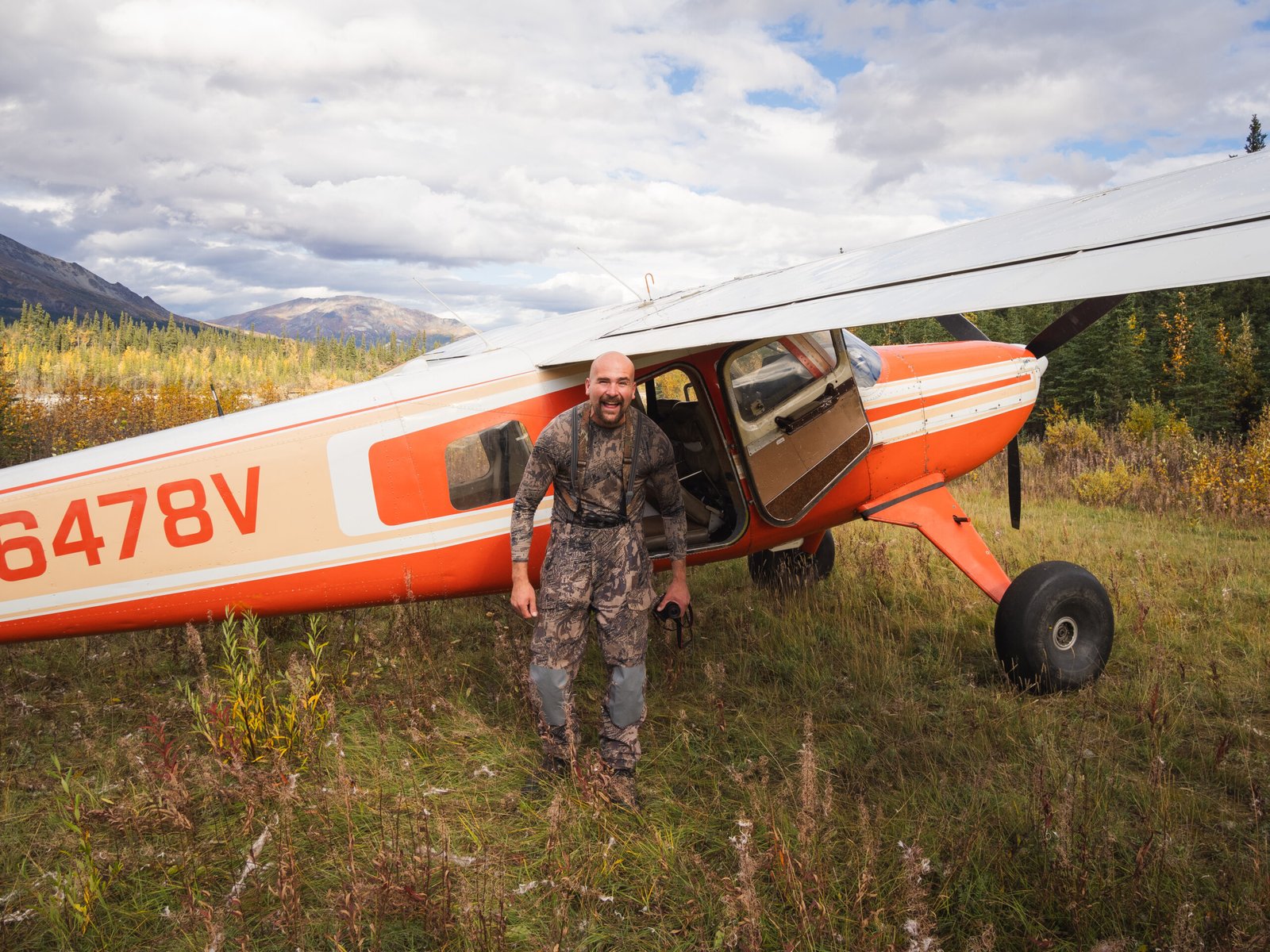
Arrival at the Airstrip
The previous night in Fairbanks, we made our final preparations from the comfort of our AirBNB. We studied maps that we had already looked at many times before. We traced drainages and debated potential camp locations. We identified several areas we wanted to spend time hunting and scouting, but our attention kept getting drawn to the twin creek valleys. We were ready to hit the ground and see the terrain for ourselves.
Our flight to the airstrip that morning was beautiful and uneventful. We spotted several mature bulls from the air as the plane carried us deeper and deeper into what appeared to be ideal moose habitat.
As we approached the strip, the afternoon sun cast a warm glow on the valley. Streaks of yellow shimmered against the dark green spruce. Although it was a warm day, the days were shortening and we knew the moose rut would be arriving soon. At least that’s what we hoped.
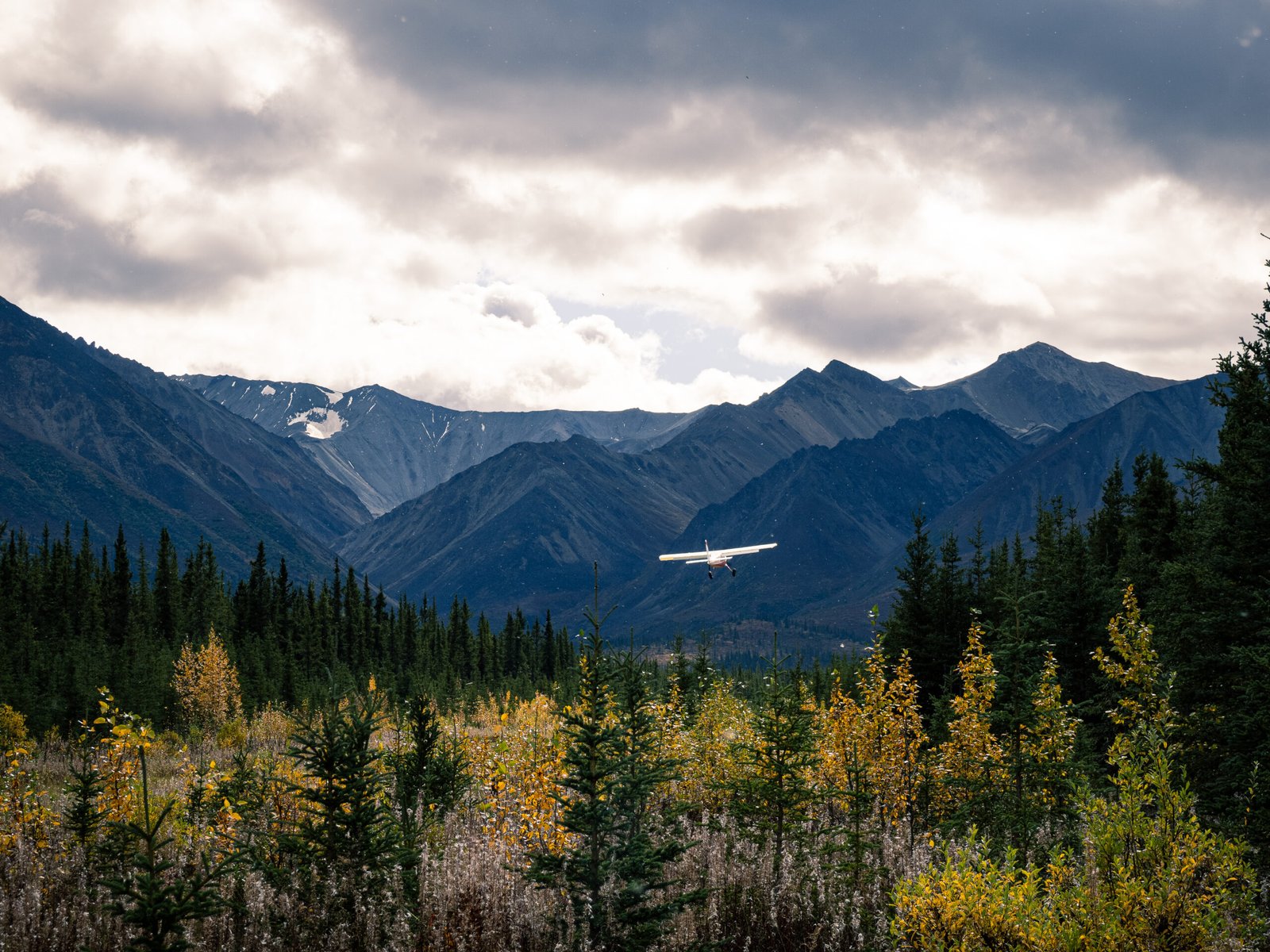
Shortly after our plane departed, we realized we weren’t alone.
A solo caribou hunter walked out to the airstrip from his campsite tucked behind the trees just off the runway. He was successful in harvesting a giant bull caribou just a few days earlier, so we stopped and talked to him for a while.
We asked the caribou hunter if he had seen any moose on his trip, as he had been 8 miles up one of the valleys we were interested in hunting. To our surprise, he hadn’t seen a single moose in over a week in this country. He also informed us of a horseback hunt transporter operating from the far end of the strip.
Between the lack of moose sightings and the high amount hunting pressure the airstrip seemed to attract, we made a last-minute pivot on our idea to hunt the twin creek drainages. We decided instead, that we would move to the seemingly less pressured side of the river and start our hunt there. After we said goodbye to the caribou hunter, we started shuttling gear across the river
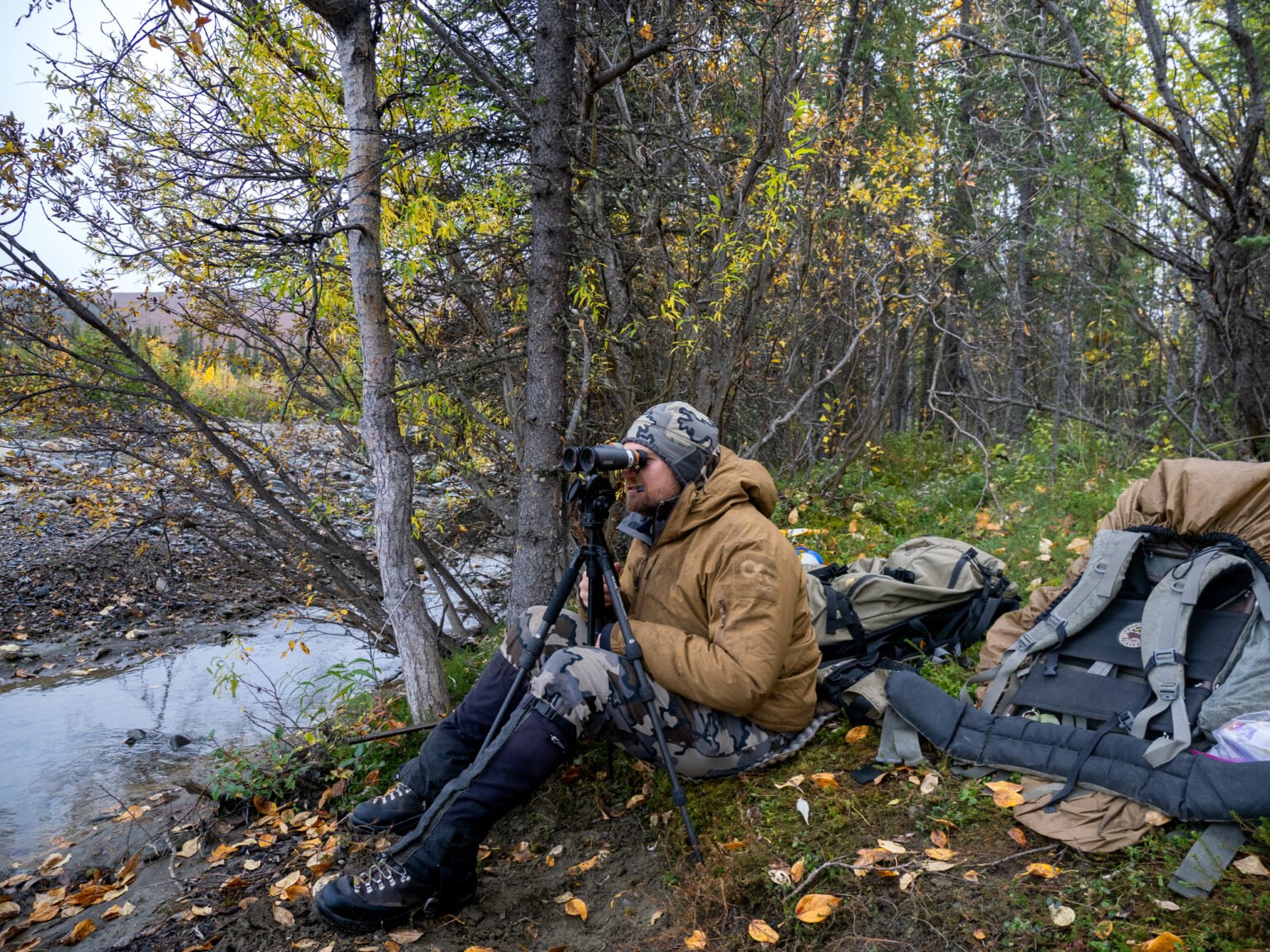
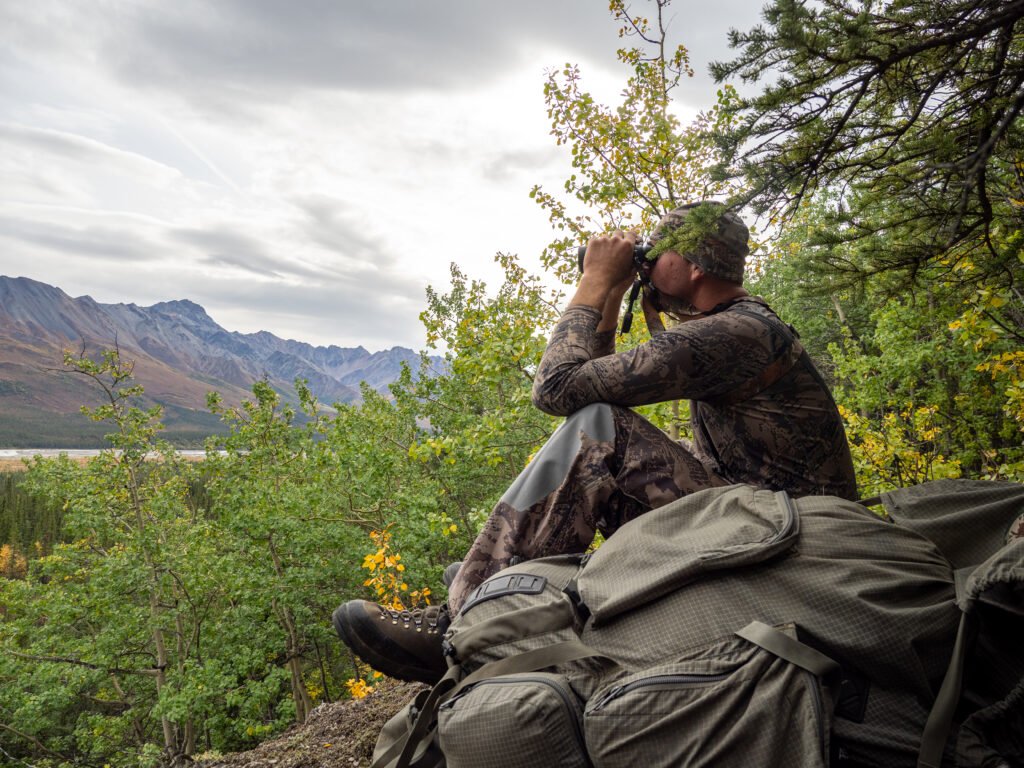
Our first glassing session the following morning yielded tons of wildlife sightings – many Dall sheep, black bears and a grizzly bear. We even watched two wolves chase a band of young Dall rams up the side of a mountain, where they finally escaped to safety on a series of vertical cliffs. The chase went on for a couple hours, and we watched as the wolves finally gave up as the sheep made their way to safety in terrain too aggressive for the wolves to climb. It was an incredible display, something most people only get to see on National Geographic. Even without moose activity that morning, we felt very fortunate to be in that location at that time to observe such a spectacular event.
Over the next couple days, we hiked, glassed, raked brush, called and glassed some more. Our efforts turned up very little sign, and the moose sign we found looked to be from the previous winter. It wasn’t the amount of moose sign I expected to find in an area with such a high success rate.
Although our decision to cross the river wasn’t turning up much in the way of moose activity, our new vantage from across the river gave us a great view of the side with our airstrip, and allowed us to study the terrain near the twin creeks.
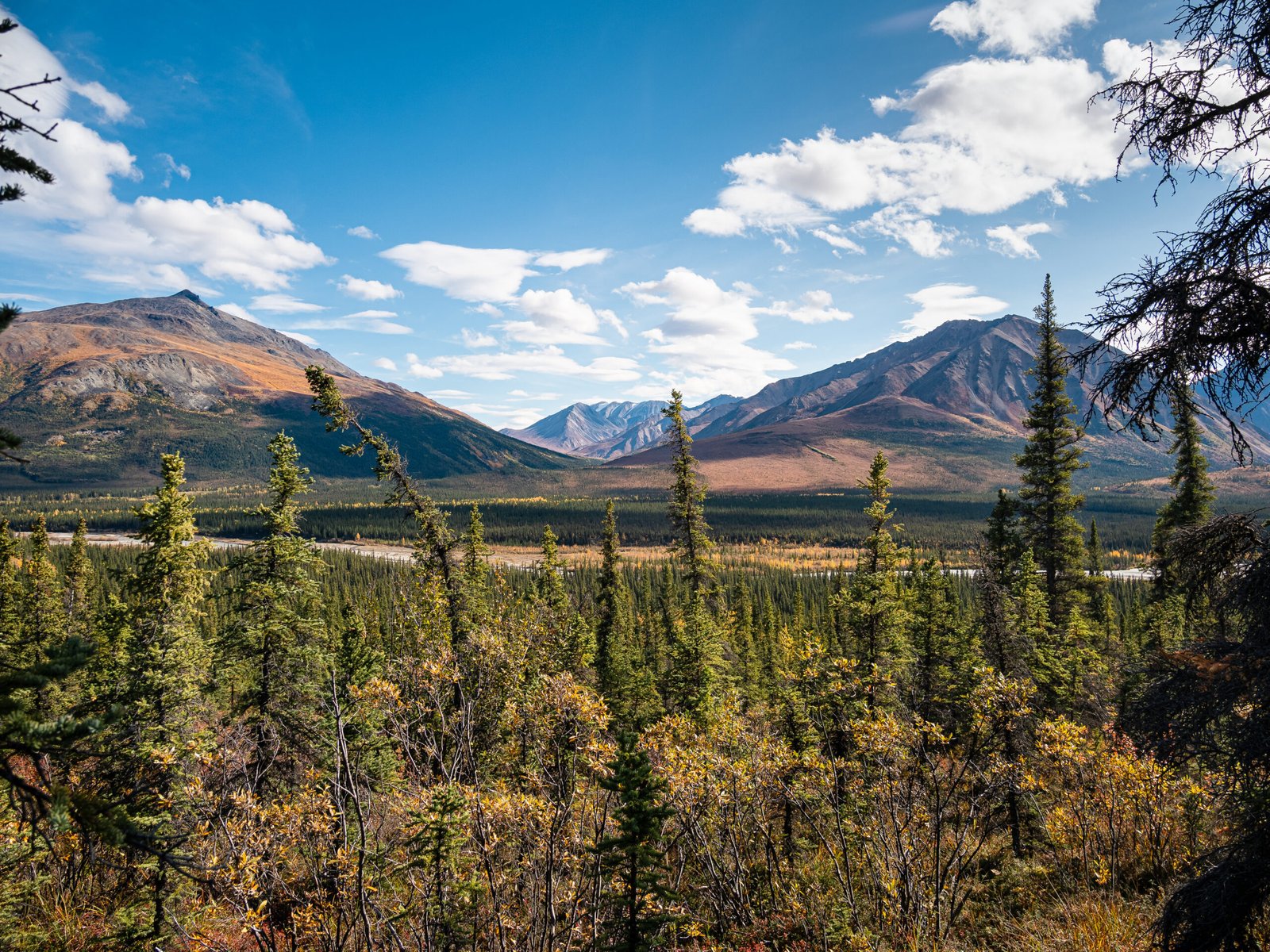
In the distance, we could see the long, winding mountain valleys leading away from the main river and our airstrip base. Between the two creeks was a long ridge that rose from the bottom of the valley, then slowly worked its way up to the distant mountains behind. From the top of that ridge, we believed we would be in a unique position to view both creeks from a single location. I was starting to like the idea of being on top of that ridge more the longer I thought about it. Terry and I agreed that we would eventually make our way back to that ridge if we didn’t run into a moose before than that.
After two and a half incredible, yet quiet and relatively uneventful days on our side of the river, we made the call to head back to the airstrip side. Once again, our attention returned to the twin creek valleys.
Moving Camp
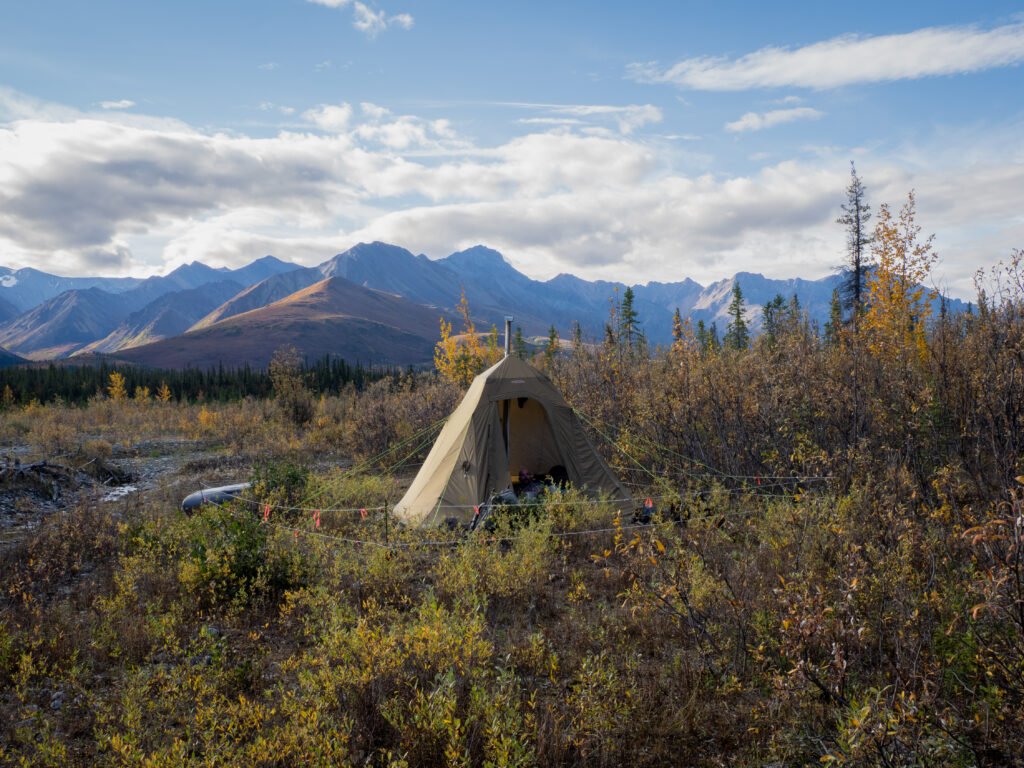
We woke to a chilly, overcast morning with light rain and a cold breeze coming straight down the river. After a brief morning calling session, we packed our gear and loaded everything back across the river. As we shuttled our gear, the clouds started to break, revealing yet another band of rams in the distance.
The valley felt full of life, yet devoid of moose. I had to remind myself to keep the negative thoughts out of my head, a moose could appear at any moment!
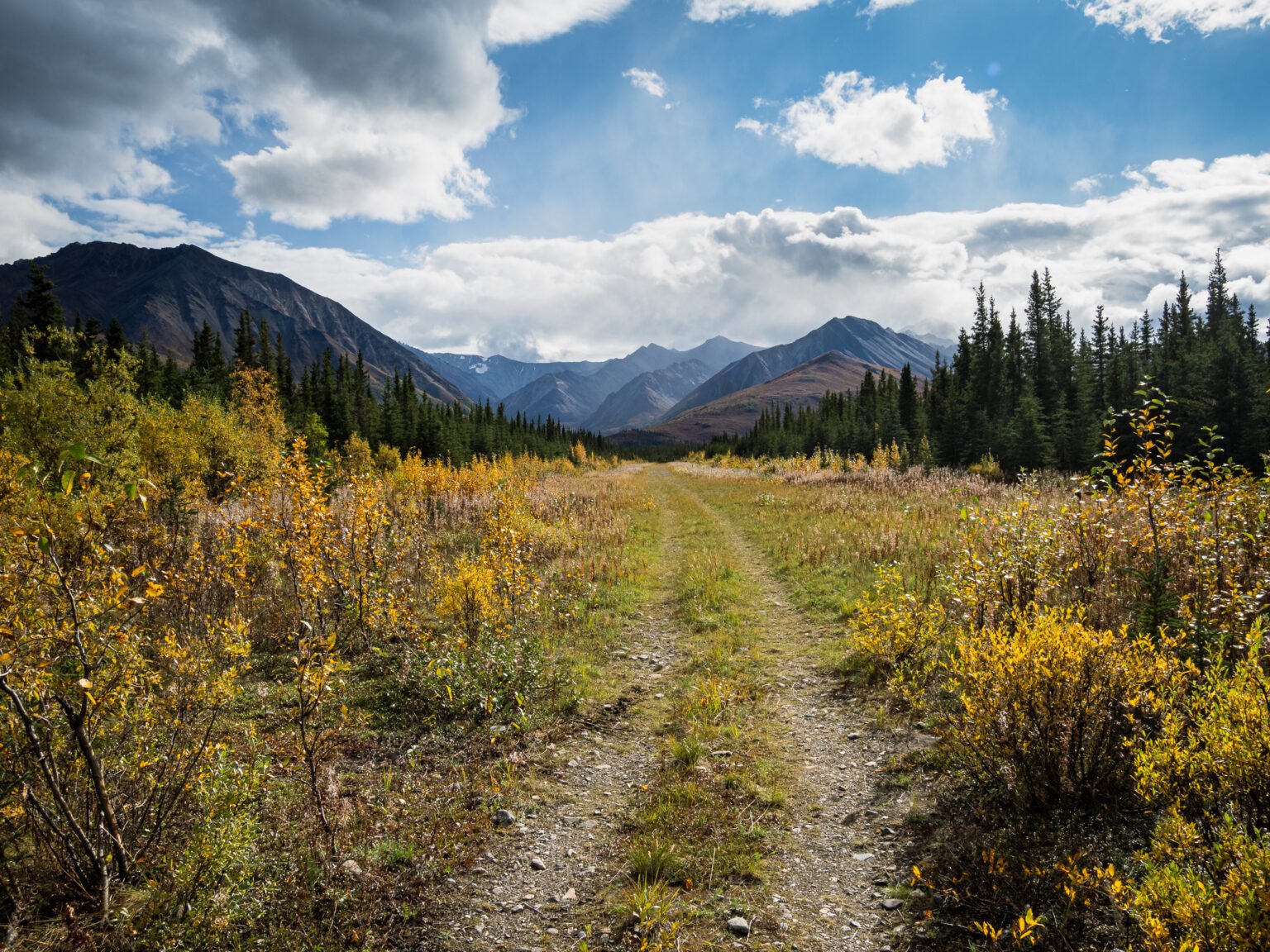
After the crossing, we dropped camp and made a plan for that evening while we refueled with snacks. With most of the day remaining, we decided we should make use of our time to explore a route to the South creek – the one closest to our camp. We walked to the end of the strip and discovered a well-used horse trail heading off toward the mountains behind the strip.
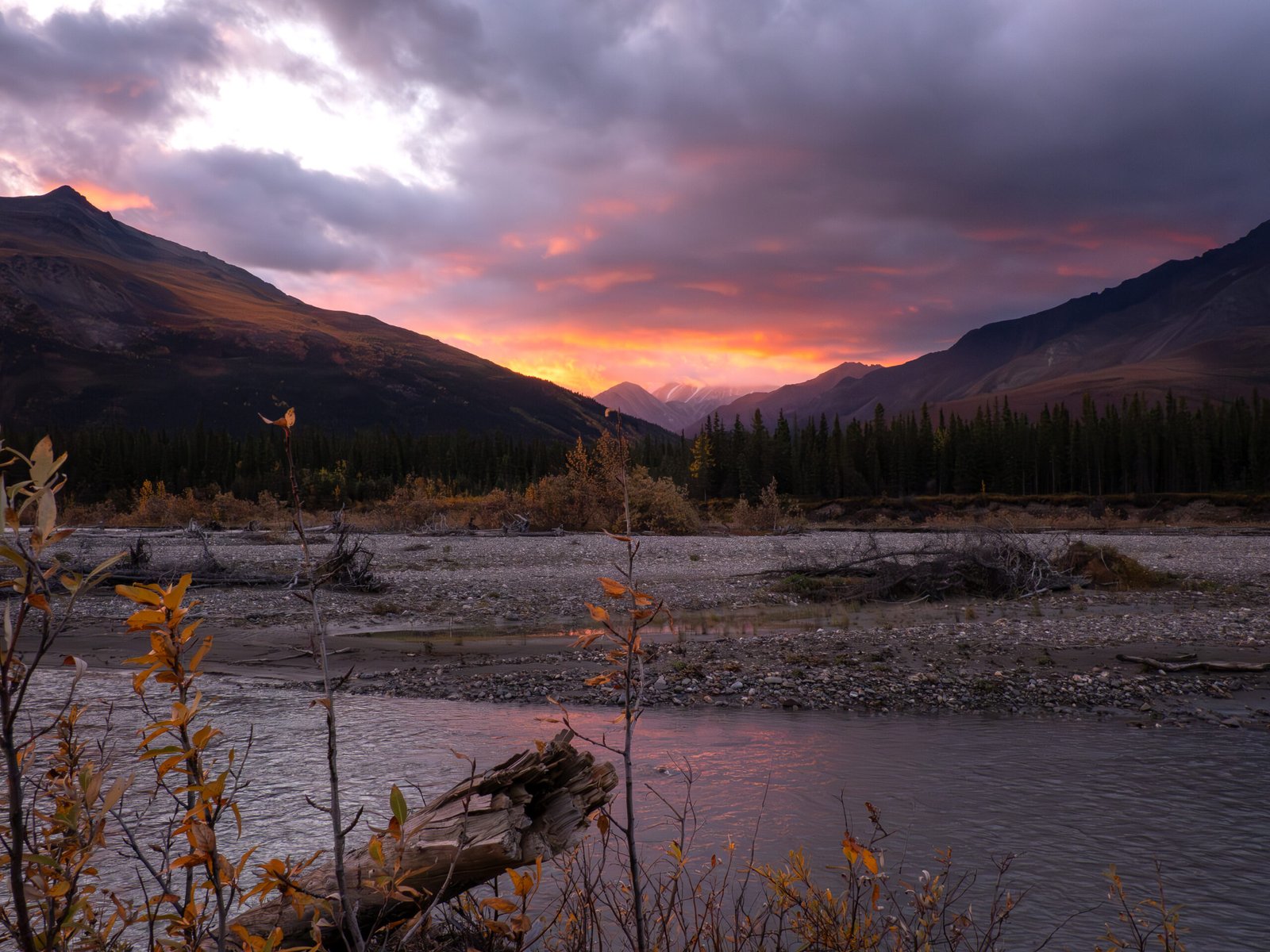
Finding signs of human activity can be disappointing in a wilderness setting – but we welcomed the ease of travel made possible by the established horse trail. We followed the trail for a while until it disappeared into a tangled maze of trails in the moss beneath a dense canopy of spruce trees. After a short bushwhack toward the sound of running water, we reached the edge of the rocky creek bed of the South creek.
We spent the evening calling and glassing from the edge of the creek. I really liked the look of the edge habitat near the creek, and it felt like a bull could step out to the edge at any moment. We noticed a significant increase in fresh moose sign as we moved up the creek as well. It felt like we were finally on the right track.
Our calling didn’t receive any responses that evening, but we both noted the day had a different feeling. The temperature had dropped and it started to feel a lot more like fall – the moose rut should kick off any time now, we felt.
As we sat and glassed, we once again discussed the long ridge separating the two valleys. We could see it in the distance from where we sat. At the top of the ridge, we still believed we would have an excellent vantage point to view both the North and South creek valleys. As the last few minutes of light disappeared over the horizon, we completed our glassing session and started walking back to our base camp. We moved silently back to camp in the dark, and didn’t speak much of our plans until we arrived back at camp that night.
Over our Peak freeze-dried meals that night, we discussed our thoughts for the following days. We still had plenty of time, but we could feel the pressure mounting as we neared the halfway point in the trip. We still hadn’t seen a single moose.
We finished each others’ thoughts as we discussed the next day’s plan. We immediately agreed we needed to get to that ridge dividing the two creeks. Immediately, we began making plans for a spike-out camp on the ridge top.
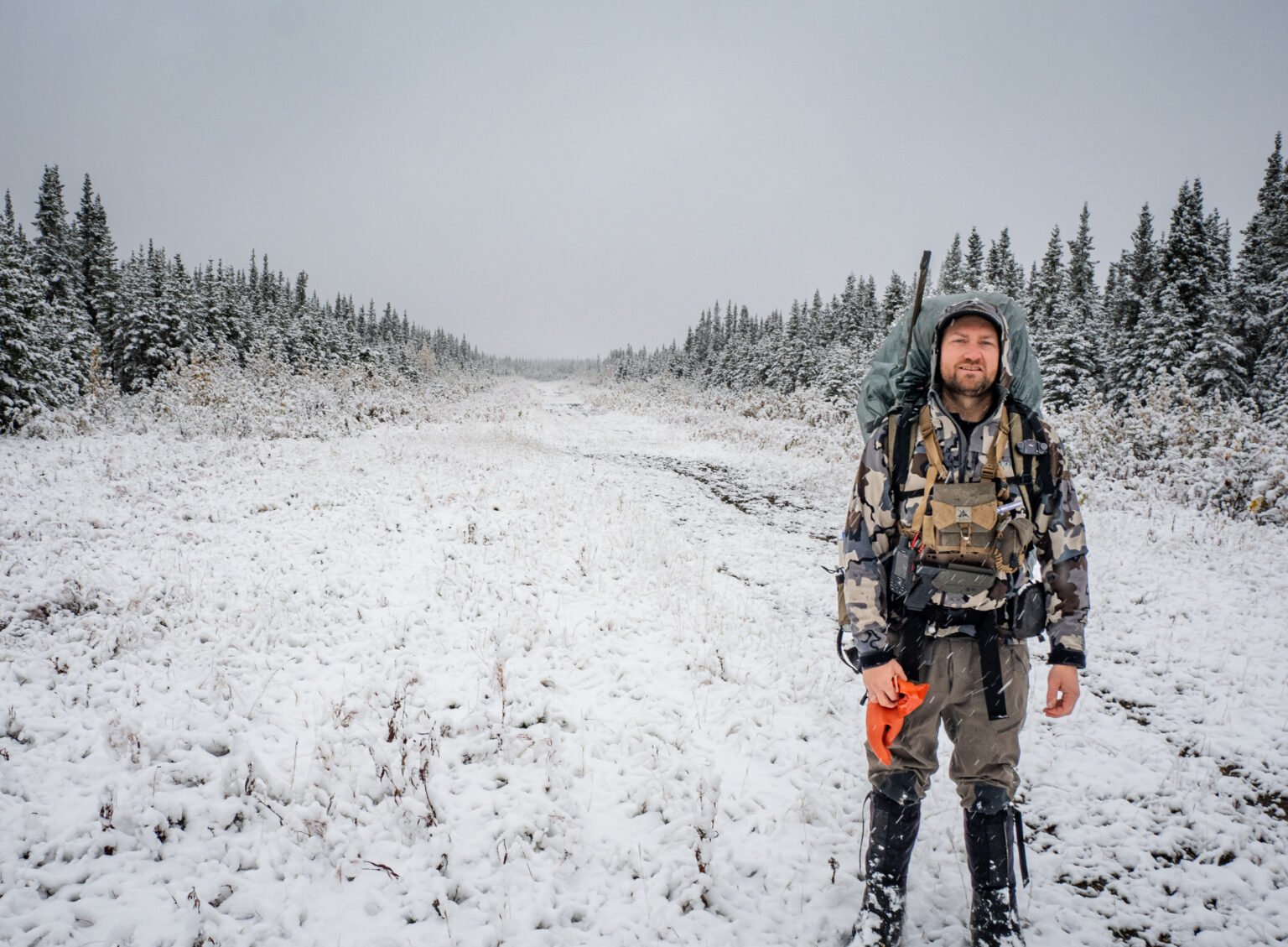
The following morning, we pulled together our gear and loaded our packs for three nights on the ridge. To my surprise, when I opened the tent flap and stepped out that morning, nearly 3-inches of fresh snow that had accumulated overnight! It suddenly felt like we skipped fall and went straight to winter.
After tidying up our campsite and hanging our food a safe distance away, we departed camp and quietly worked our way back toward our creekside calling location from the night before.
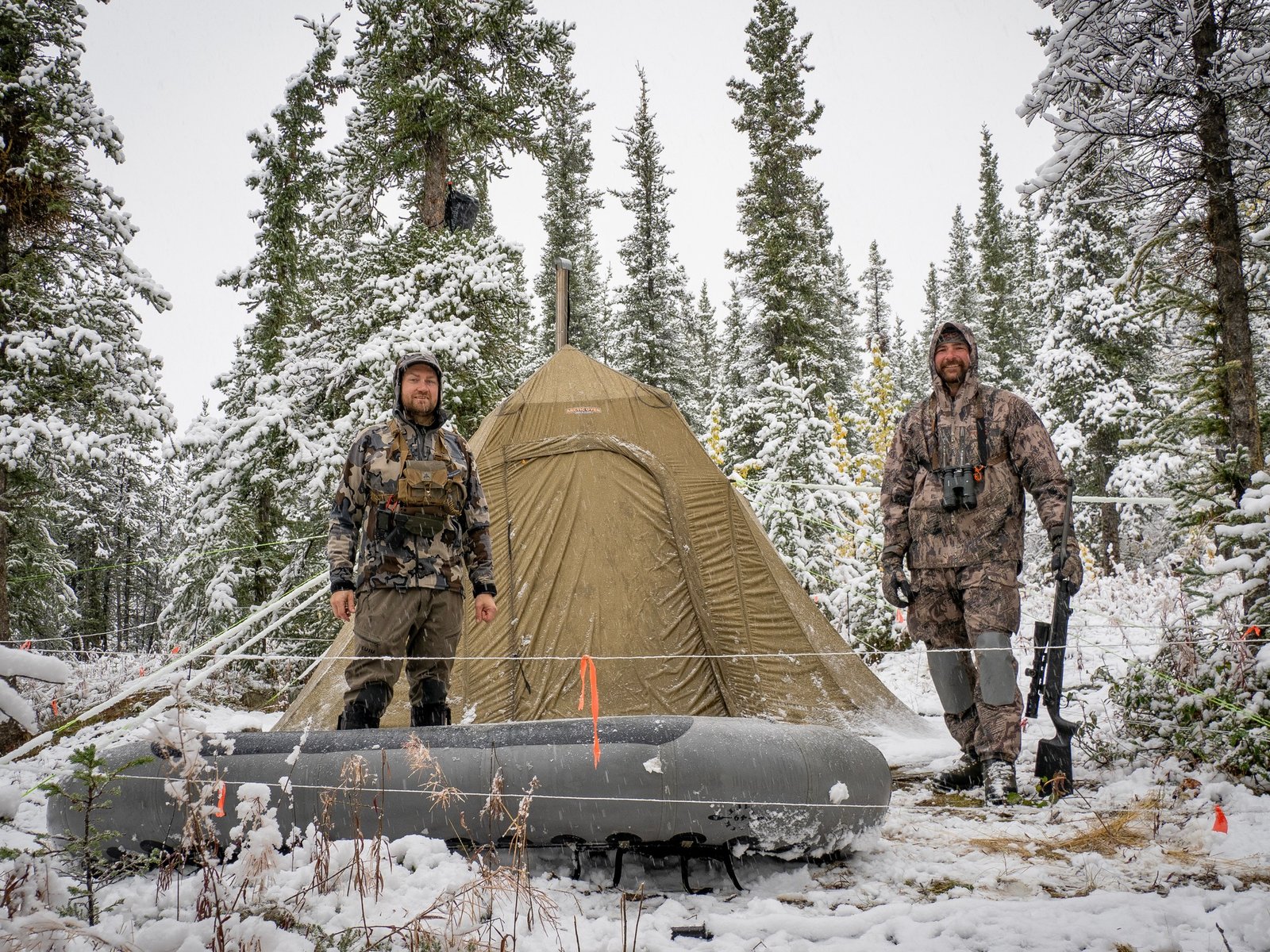
We setup a morning calling session for the morning, raking brush and light cow calls made from the same location we ended at the night before. We patiently awaited a response. The valley was snow covered and quiet, with an ominous band of dark clouds off in the distance — a sign there was likely more snow on the way.
The light raking felt just right this particular morning, and we patiently waited with anticipation.
We had high hopes of running into a mature bull on this trip, but by this point, we would have been thrilled with a bull of any size. Although there was certainly more moose sign along this creek than we saw during the first few days, we still weren’t convinced staying in this location was the best plan. Giving it more time may have eventually paid off, but sometimes curiosity and impatience drive decisions in the backcountry that don’t seem logical in hindsight.
Another morning passed without a moose sighting and our impatience pushed us farther into the mountains. We were set on camping on top of the dividing ridge. We had to see what was on the other side and finally lay eyes on the North creek valley.
The Ridge Line
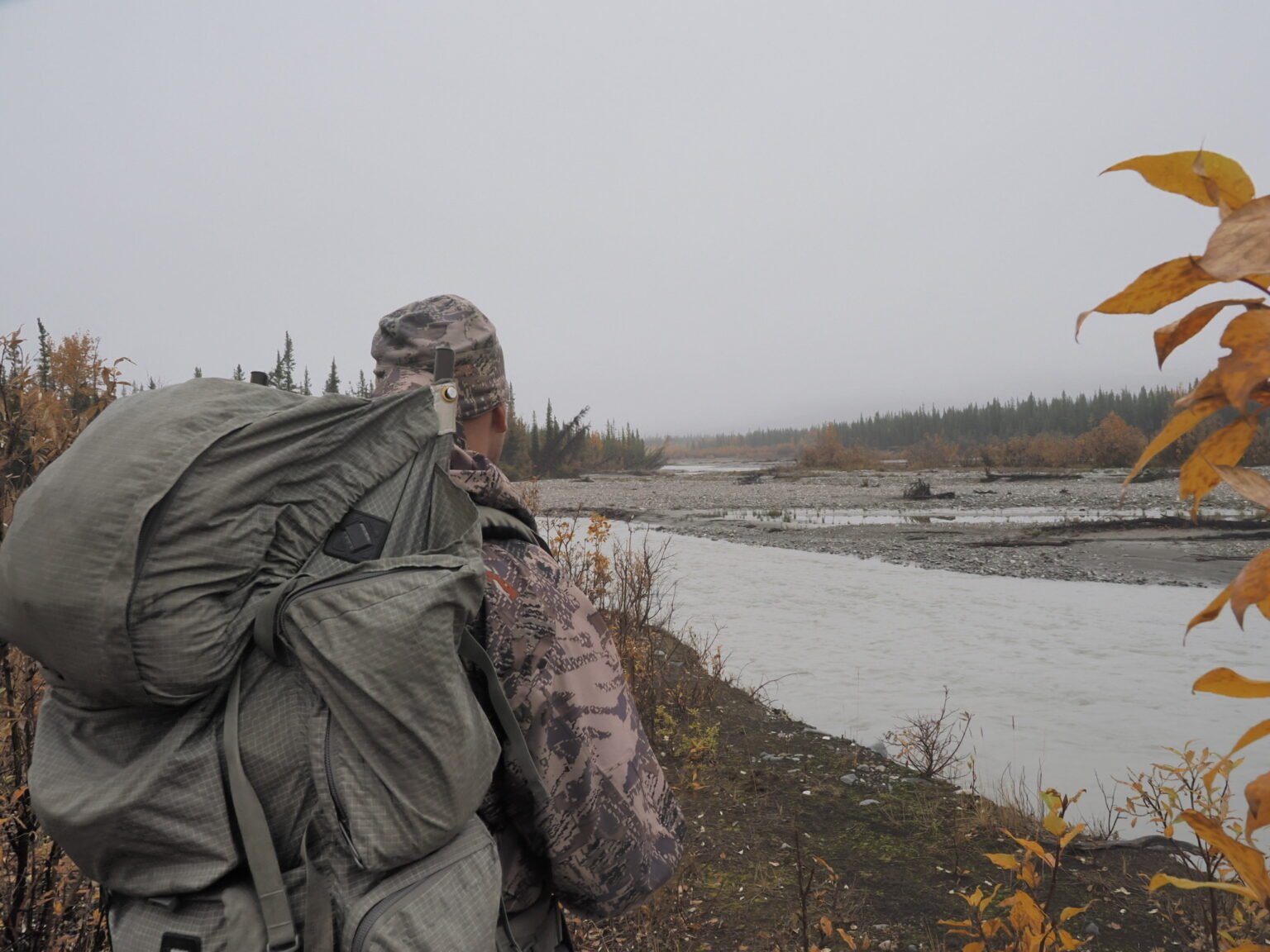
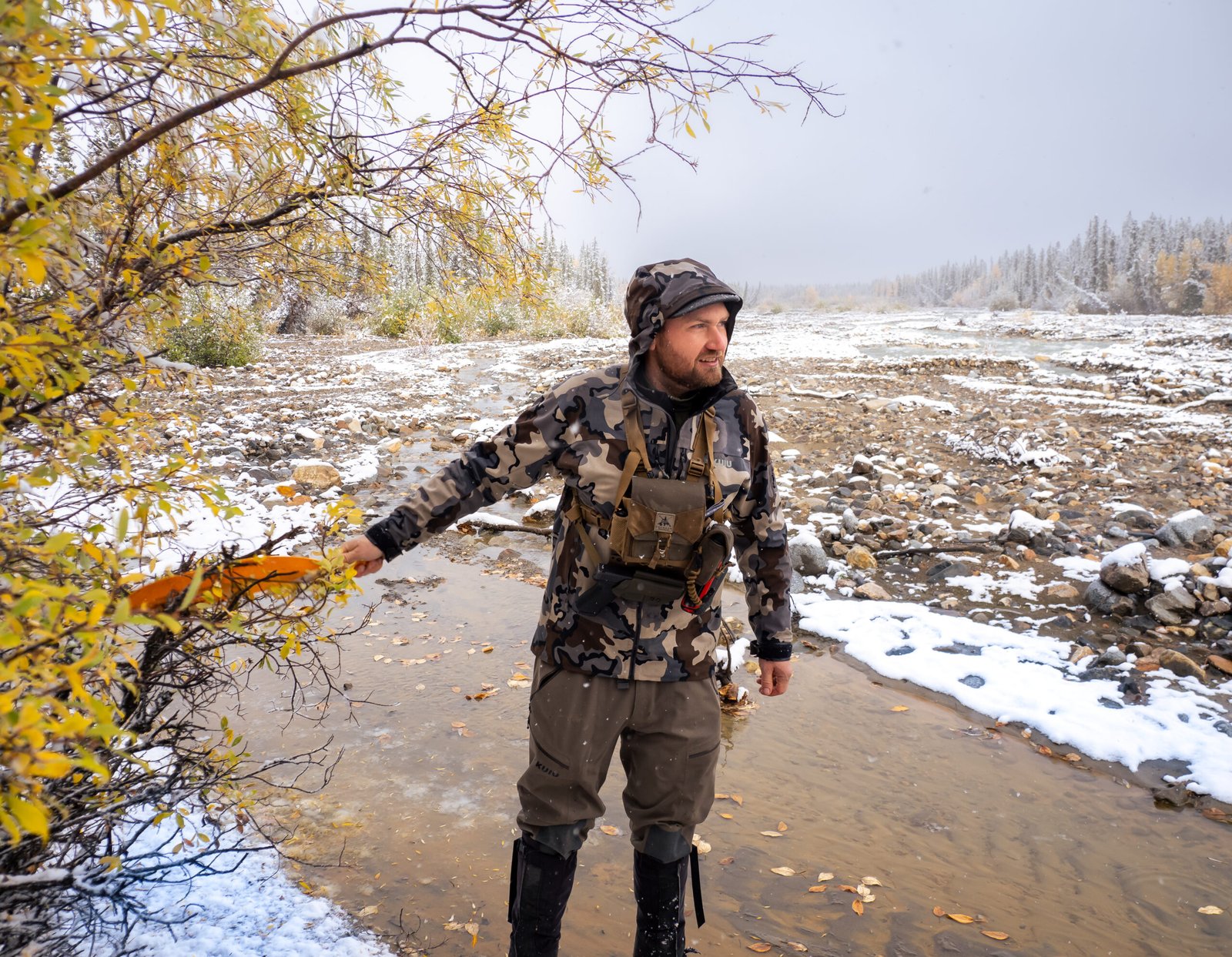
With just enough daylight remaining to make a move, we packed our gear and prepared to travel upriver, searching for an easy crossing to access our ridge on the opposite side. As we worked along the creek, we paid close attention to how ‘floatable’ it appeared to be in that section.
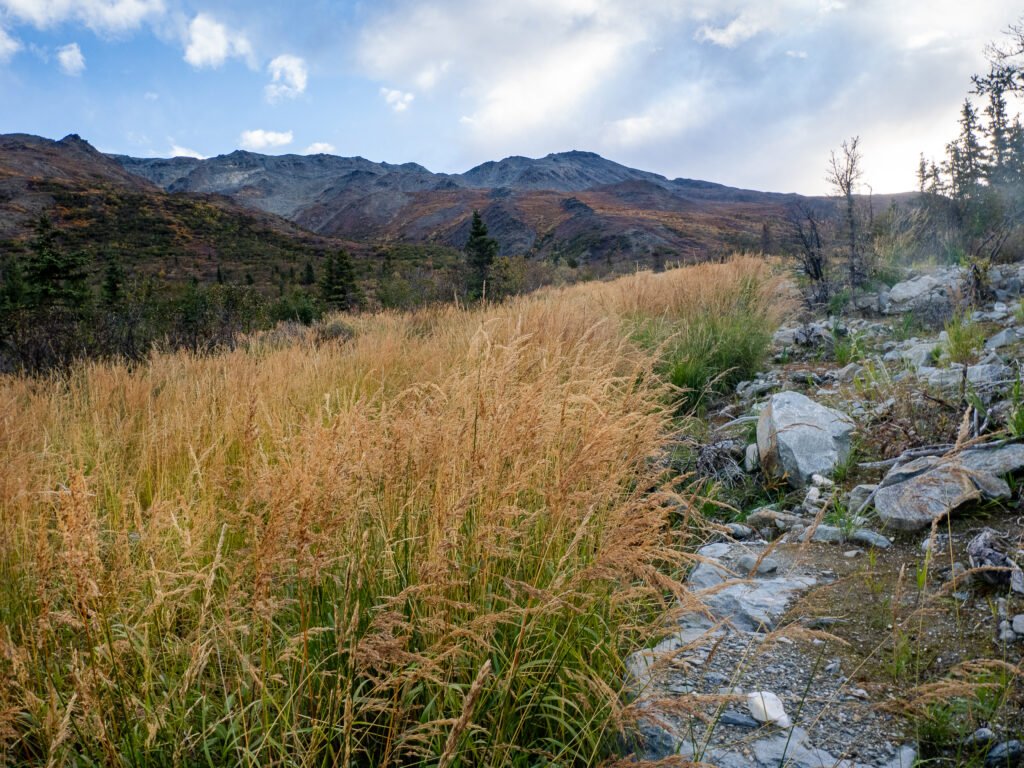
For the first 1.5 miles, the creek was just over a knee-deep in depth, with small boulders and a moderate current. It was a little shallow in areas which we knew would require dragging the boat for short stretches, but overall it appeared to be the perfect type of creek to load a moose on a PR-49 and line it back to our pickup location.
After the 1.5 mile mark, however, the creek narrowed and became shallow, rocky and turbulent. We took note of this location where the creek seemed to change, and set ourselves a limit: we were comfortable with hunting another mile upriver from this location. This meant, we were hoping to carry a bull a maximum of one mile on our backs, then float the rest.
One mile with a moose to this location would still be a huge effort, but we were both willing to put in the effort if we were lucky and found success. We could pack the moose to this location, return to camp to load our rafts, and float the remaining distance back to camp.
We hoped the North creek looked the same, but wouldn’t know until we were on top of the ridge looking down at it.
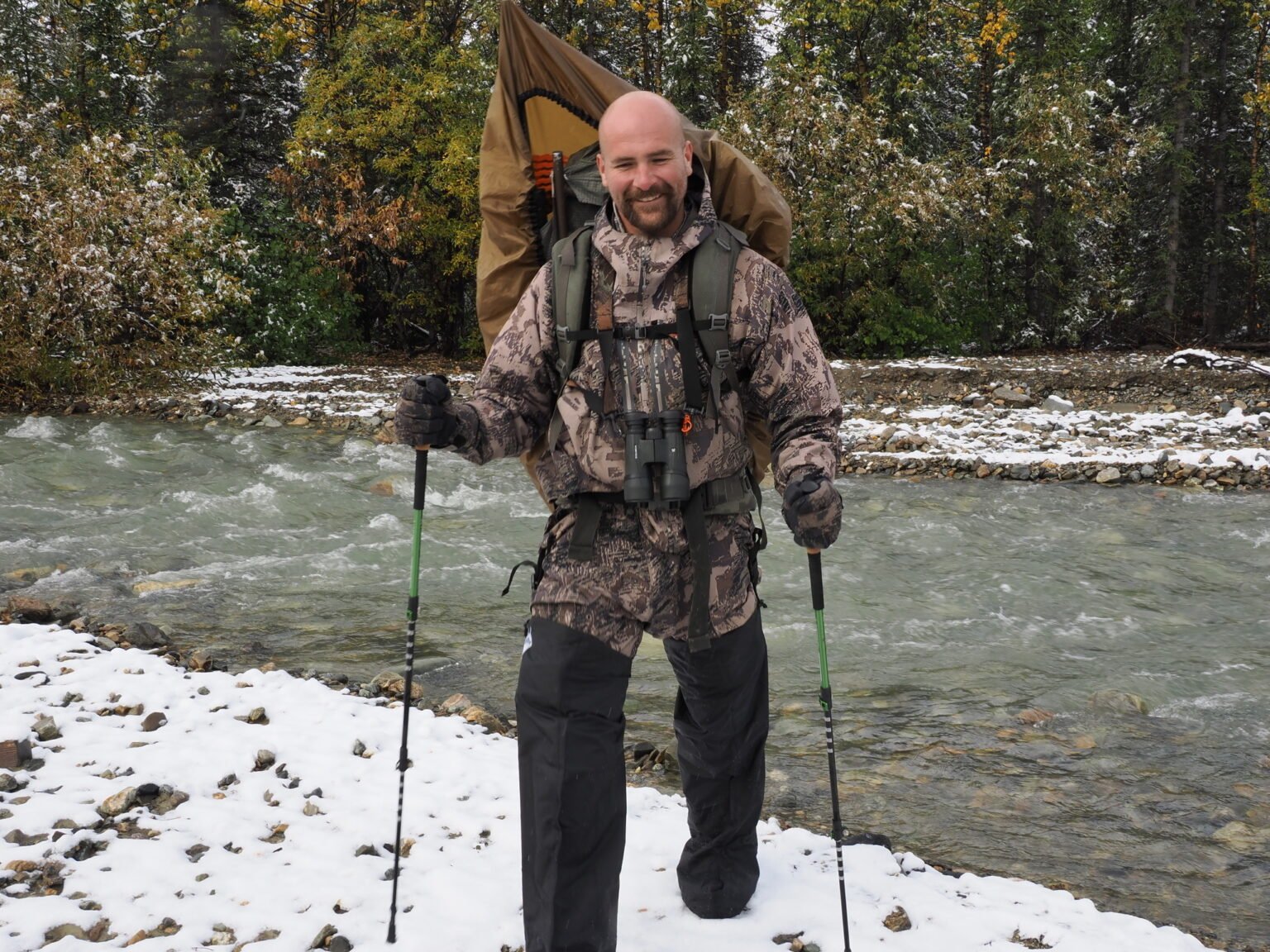
After finding a suitable crossing, we dropped packs at the edge of the creek and I pulled my Wiggy’s waders out of my pack. I put them on, crossed, and tossed them to Terry who then put the same waders on and followed me across. Once we both were across the creek, we started making our way up toward the ridge. Often times, looks can be deceiving — the route to the top of the ridge consisted of soft tundra and proved to be more challenging than we expected.
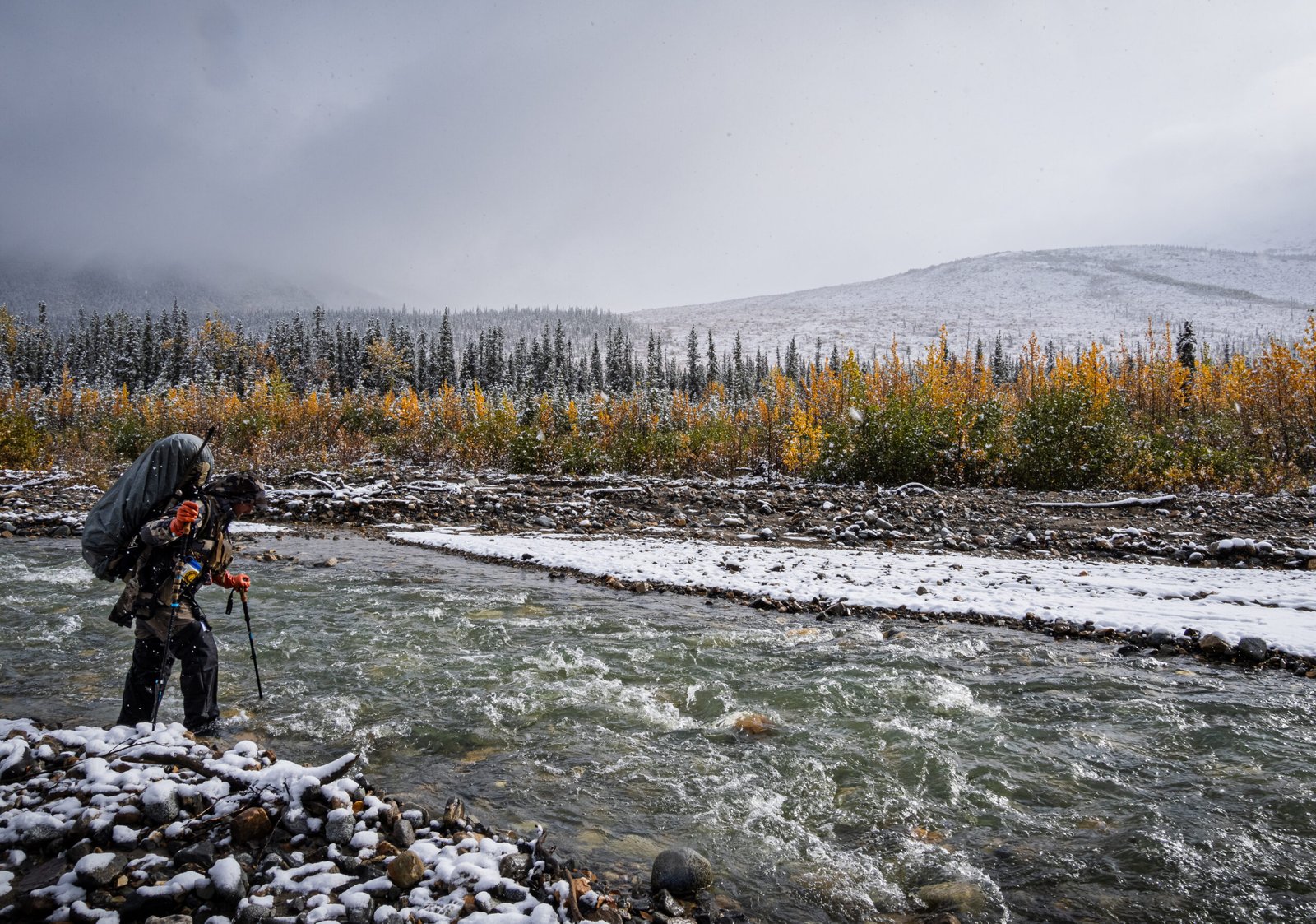
We slowly worked our way up the ridge, using game trails to help guide us as we went along our route. The route that looked easy from down below was becoming a real challenge under the weight of our packs.
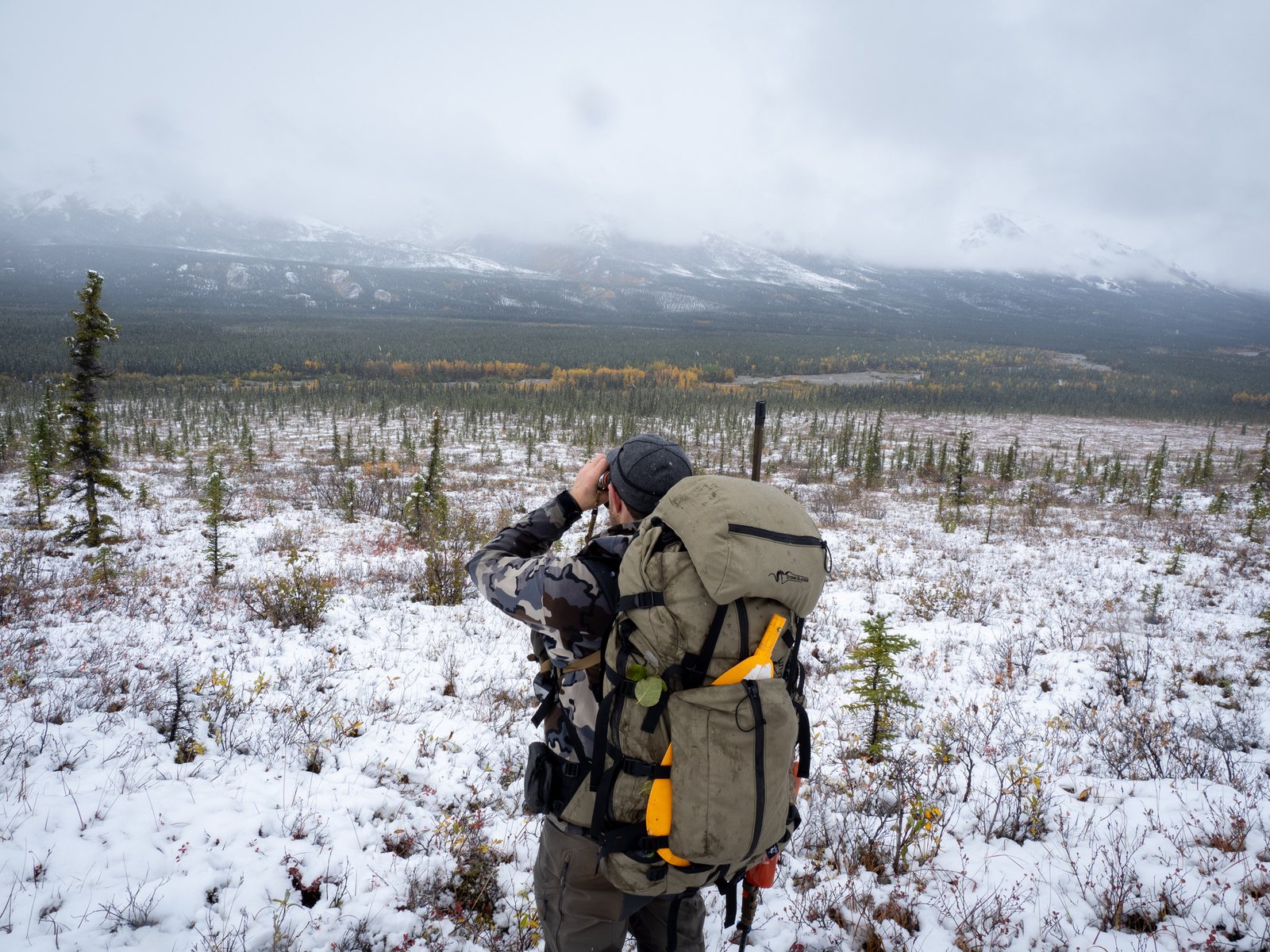
We exposed new country with each step as we climbed higher toward the ridge. The snow on the ground made for great glassing conditions. If there was a bull standing in the open, we would certainly be able to see it.
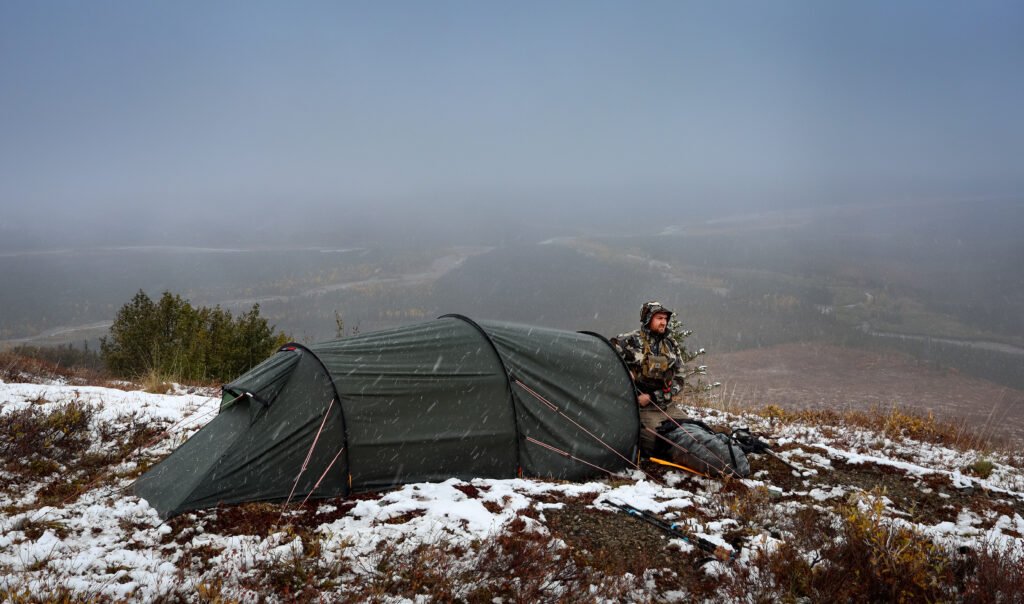
As we finally crested the ridge, the clouds began to roll in and the ceiling dropped, hindering our visibility to just a couple hundred yards. We still hadn’t laid eyes on the North creek and now it was covered in fog and light snow flurries. The air was damp and cold as the sun started to set that evening.
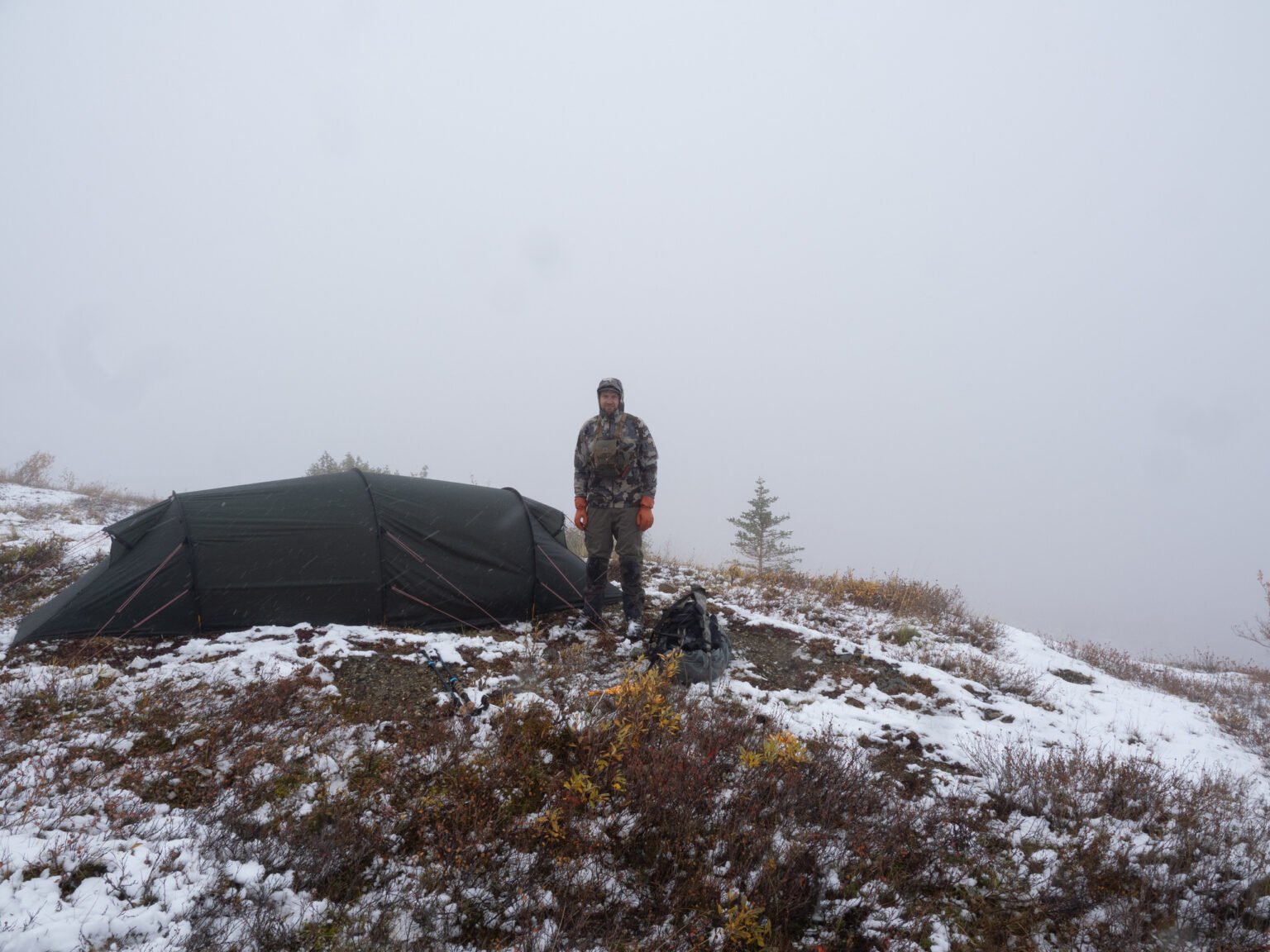
We found a place to pitch our tent, complete with a nearby muddy puddle of water to refill our bottles with (which was the only water we could find on the ridge top). Before dark, we walked to a nearby alder patch and began raking some brush mixed with a series of light cow calls.
Another night ended in silence.
That night in the tent, we discussed a plan to split up the following morning to double the ground we could cover. We decided Terry would head to the south and find a vantage point where he could watch the South creek in all directions. I was going to find a vantage where I could finally glass the North creek.
Terry and I have created a system after years of hunting together. The first shooter for the trip alternates on every-other hunt. This particular trip, it was my turn. We agreed Terry would try to locate a bull for me, and unless it was either a really huge one or a really tiny one that he didn’t want to pass up, we would meet back up later and figure out how I could get an opportunity at it. I was after my first moose after all and Terry was completely supportive in this effort.
We set alarms and tucked into our sleeping bags for the night, falling asleep to the sound of snow and freezing rain deflecting off the surface of the tent. Throughout the night, my thoughts raced with anticipation of wondering exactly what was over that ridge and what great surprises were in store for us in the North creek drainage. I was excited to finally lay eyes on it!
The Bull
We rolled out of the icy tent at first light an began packing for our day. Another fresh dusting of snow had accumulated overnight. From our position on the ridge top, we were fully exposed to the elements and the wind chill made it feel more like mid-February than mid-September.
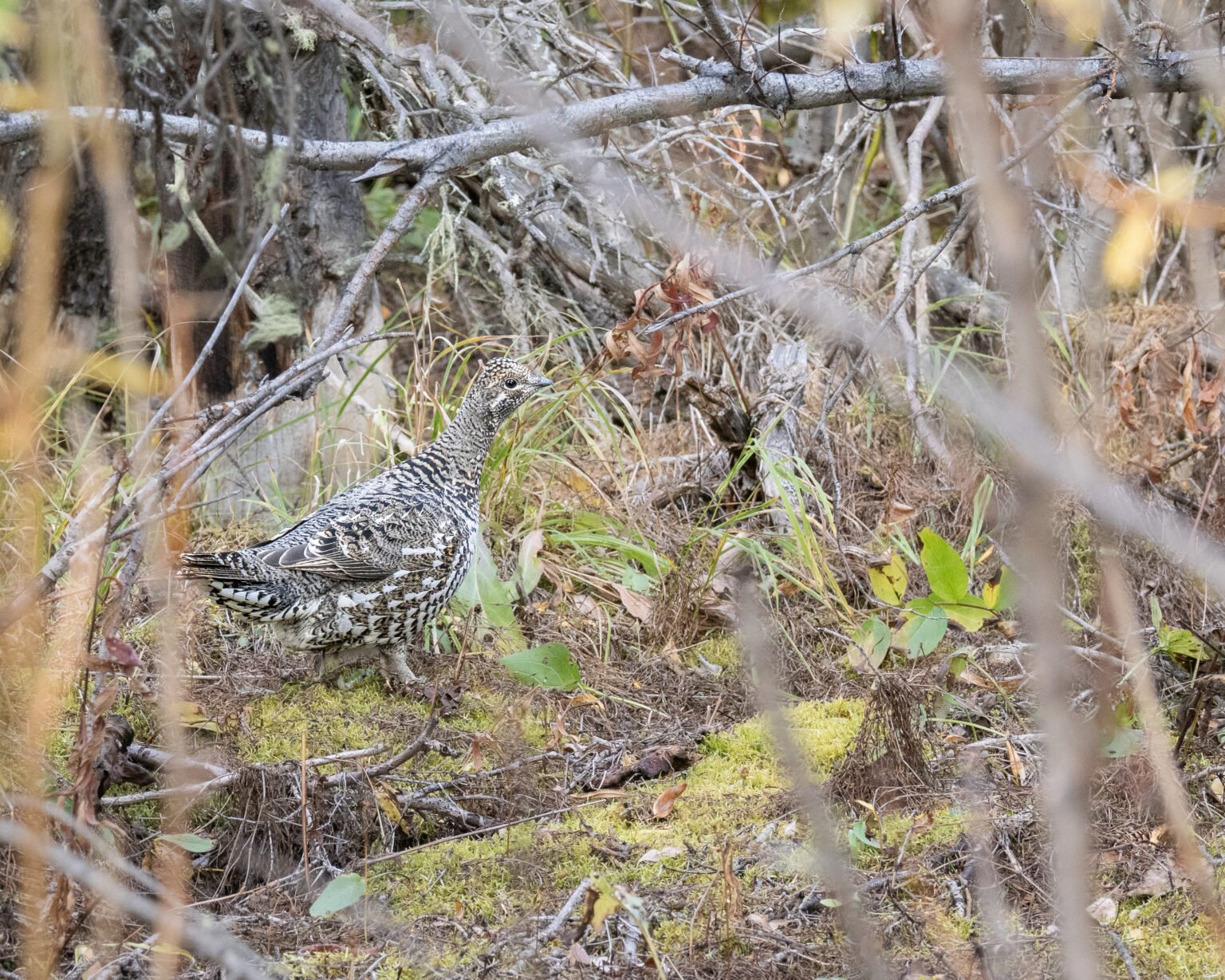
We parted ways for the day. Terry heading up the ridge to the south, and myself to the north. Flocks of ptarmigan buzzed nearby overhead as I hiked, and fresh ptarmigan tracks crossed my path everywhere I walked. I started to wish I had brought a bird dog and shotgun instead.
I continued up the ridge, but my view remained completely obscured by the fog. I settled into a comfortable glassing location where I believed I’d be able to get a good view of the drainage and patiently waited for the clouds to lift.
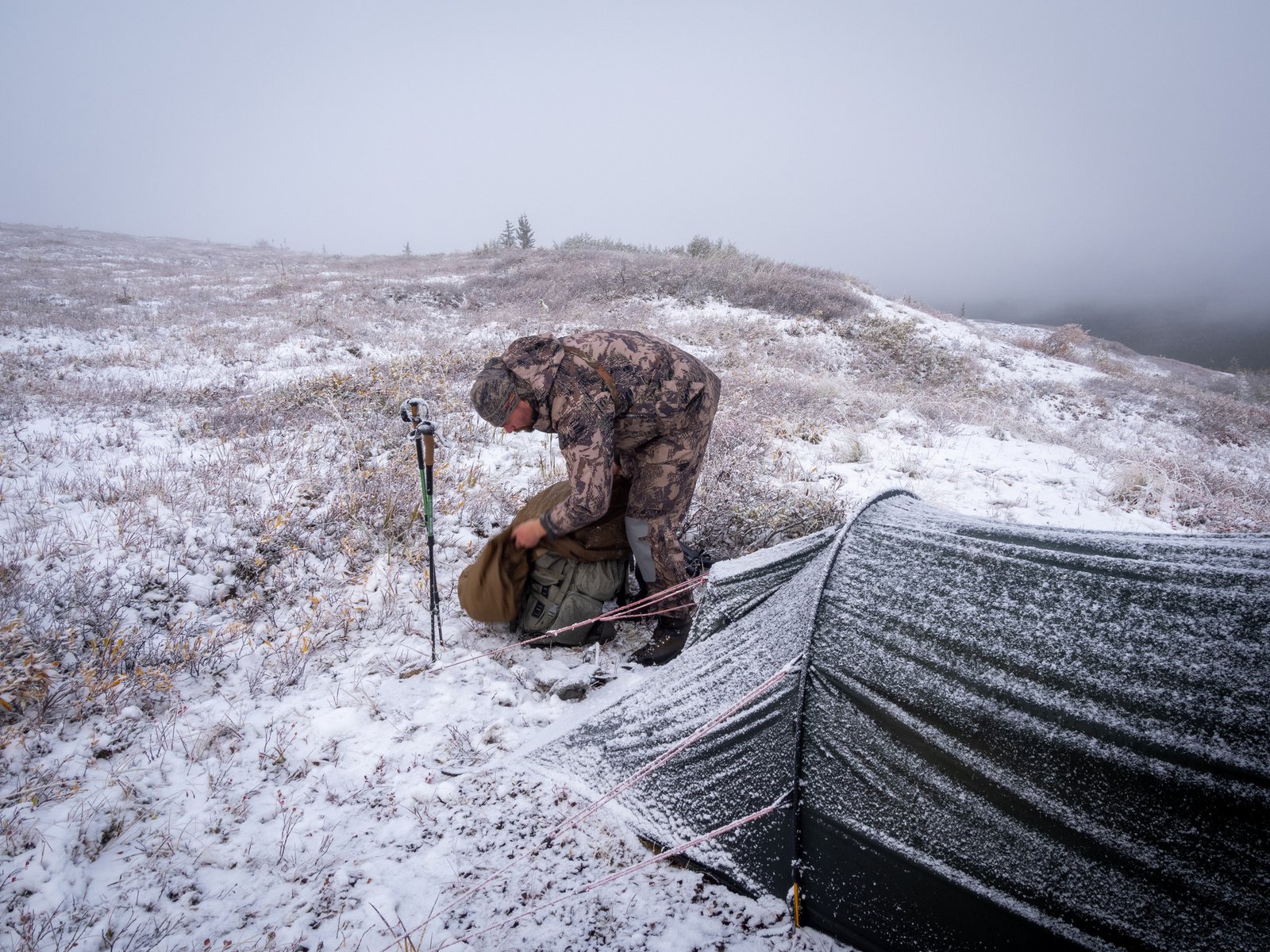
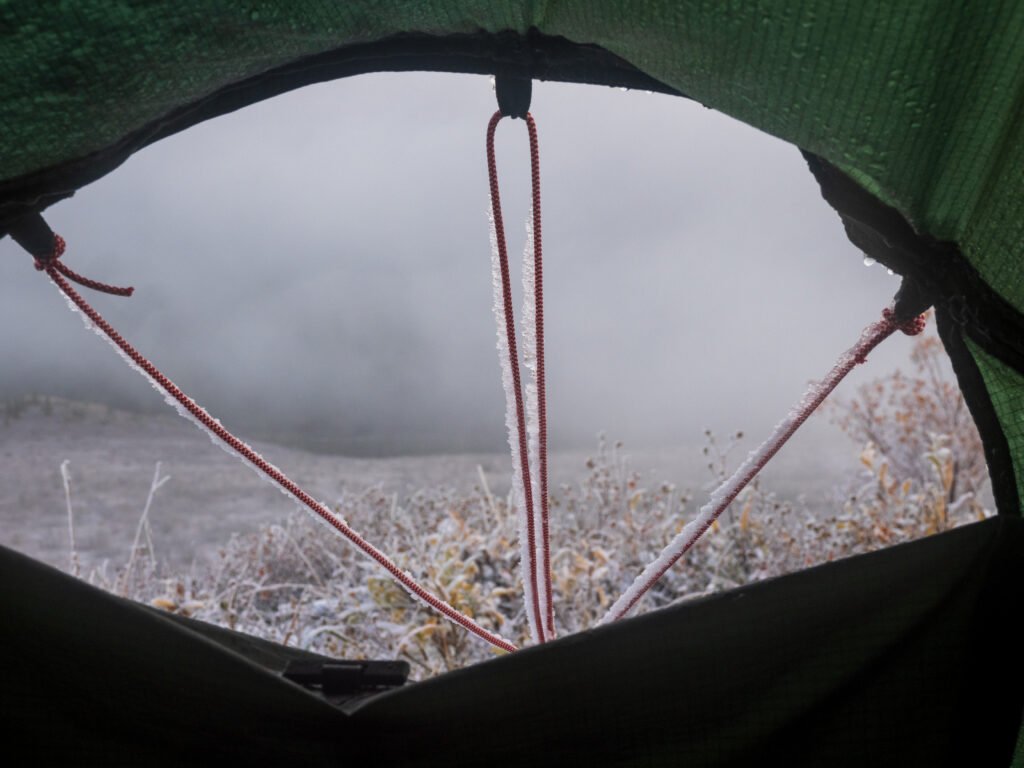
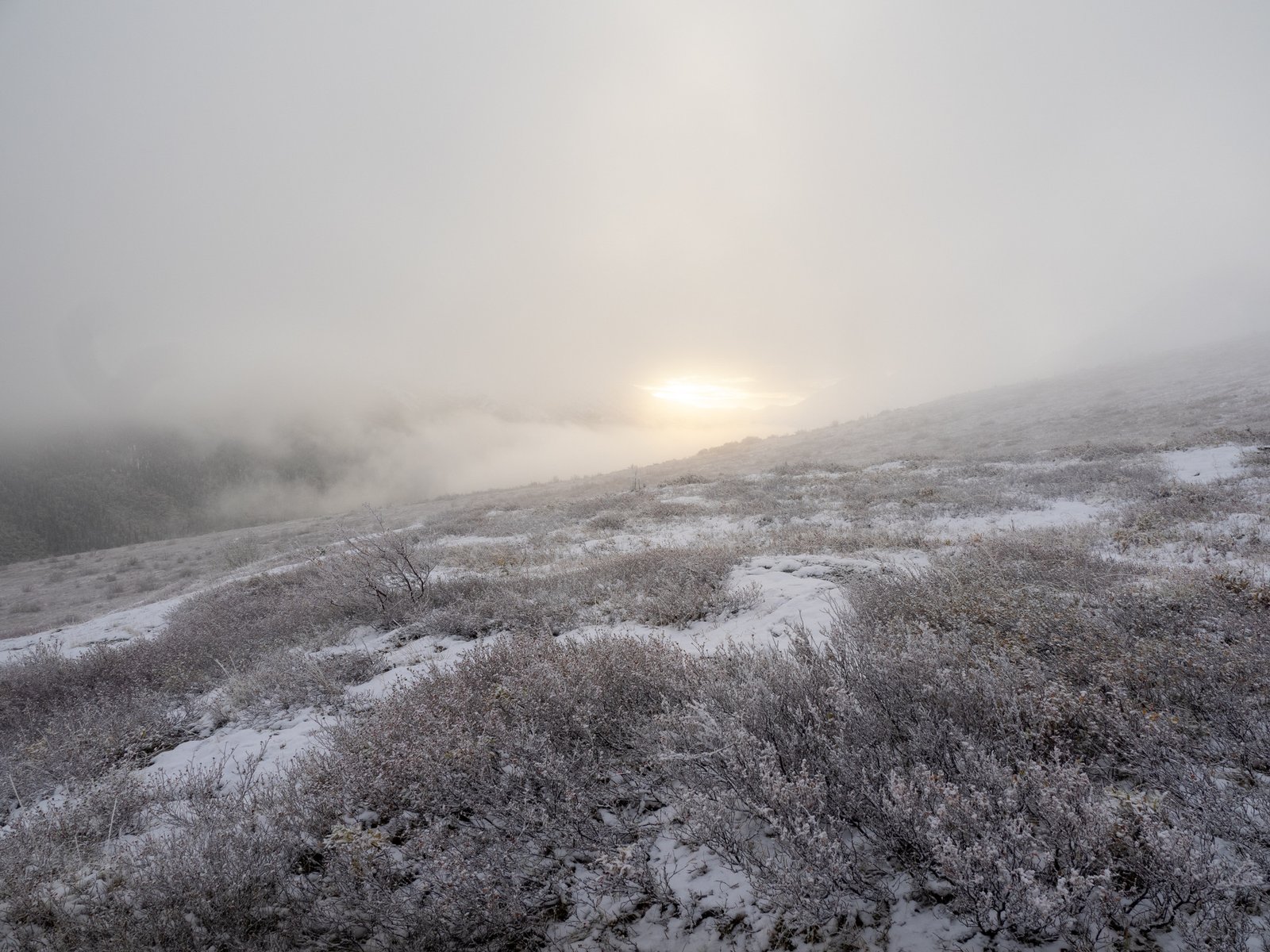
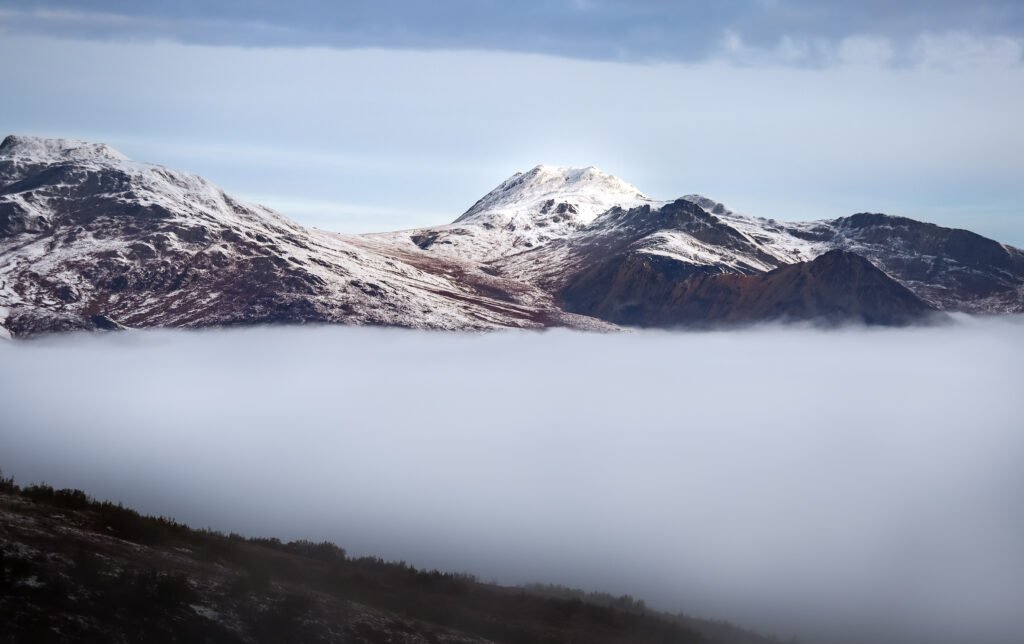
After an hour or so had passed, the clouds began to break, allowing me my first view into the valley.
From my vantage, I could finally see the North creek. The creek itself appeared very similar to the South creek, with the exception of a swift, narrow canyon just below me. The upper river appeared extremely rocky, but similar to the upper river of the South creek. Below the canyon, I thought, looked perfect for floating a moose out.
Although any moose taken above the canyon would require a short portage, seeing the creek gave me confidence to continue hunting the valley. It appeared that although packing a bull out of this upper creek section would be quite difficult, it was possible.
Often times, finding success requires being willing to do what others are not.
I sat and glassed the lower valley as it exposed itself, while the upper stretches of the valley remained hidden behind the clouds. The late morning sun began to burn some of the low-lying fog off the valley floor, exposing more territory as the hours went on.
By mid-day, the view from my vantage was incredible, and I could glass for several miles. I enjoyed the sunshine and the view as I overlooked many square miles of prime moose habitat.
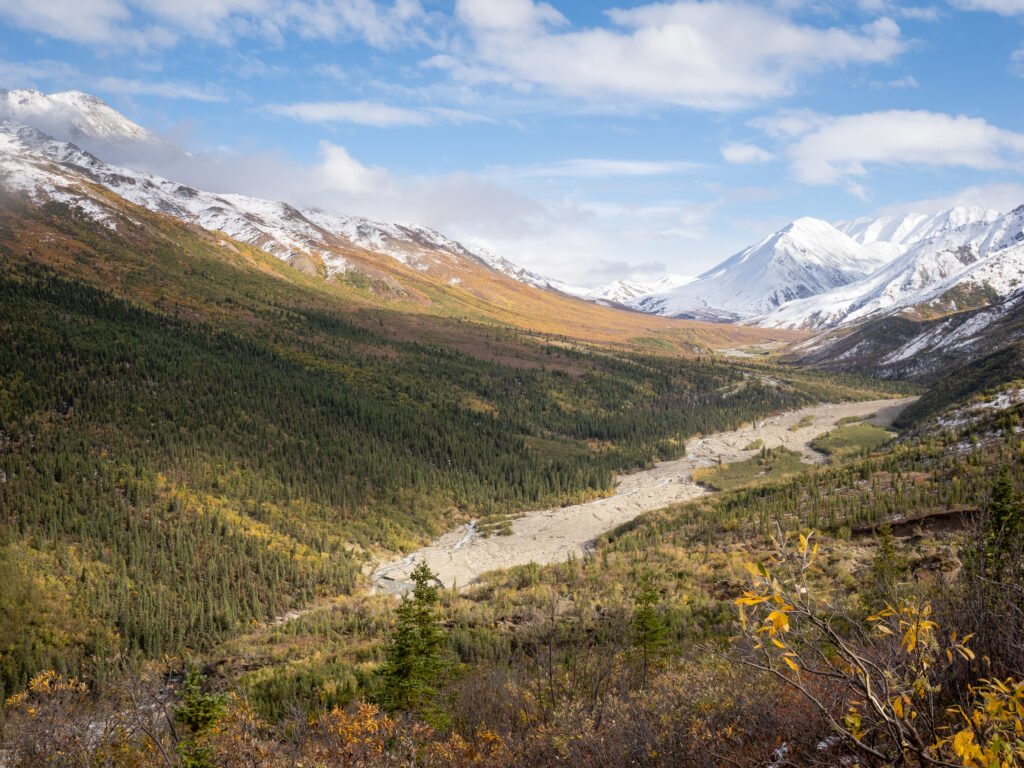
For an hour or two, I studied the terrain in front of me, picking apart each and every opening in the cover many times over.
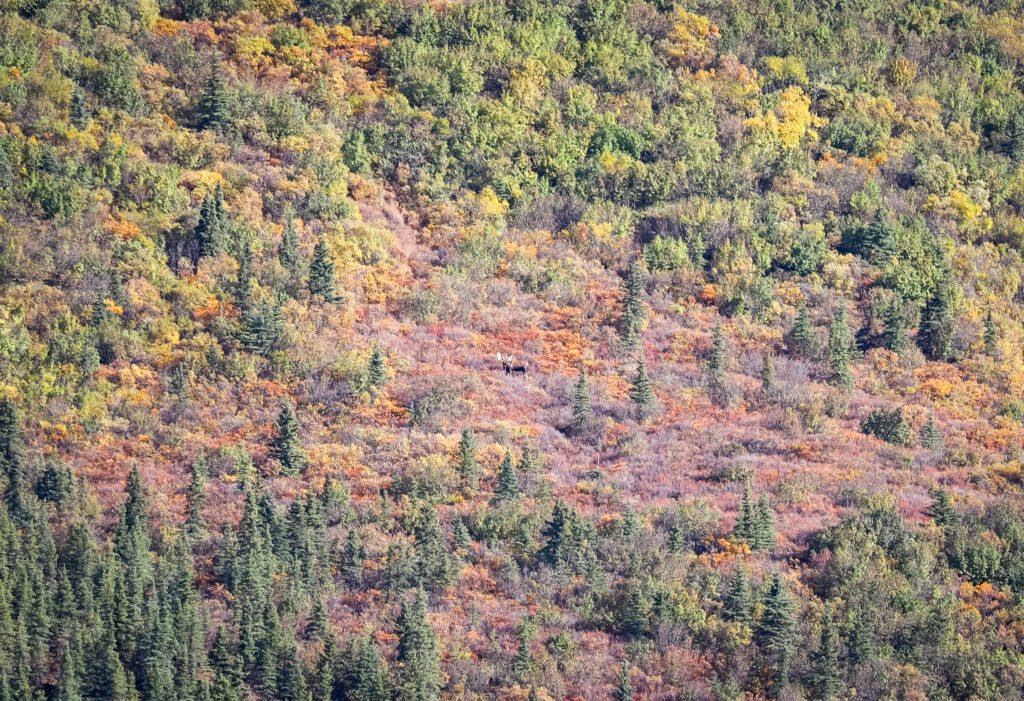
Finally, I spotted a moose. My heart skipped a beat as I focused the spotting scope on the lone animal standing high on the hillside across the valley.
I studied the moose for a moment and quickly realized it was a cow. I watched her as she fed along an open hillside about 2/3 of the way up the side of the mountain. With each day getting closer to the rut, I knew there had to be a bull somewhere nearby. Sure enough, just a few minutes later I spotted another moose just above the cow on the hillside.
It was not a bull, but another cow. Both moose appeared to be adult cows, and in my mind, it was a sign there absolutely had to be a bull somewhere nearby. If there wasn’t one there now, there would be soon. I glassed for another 20-30 minutes before I finally spotted him.
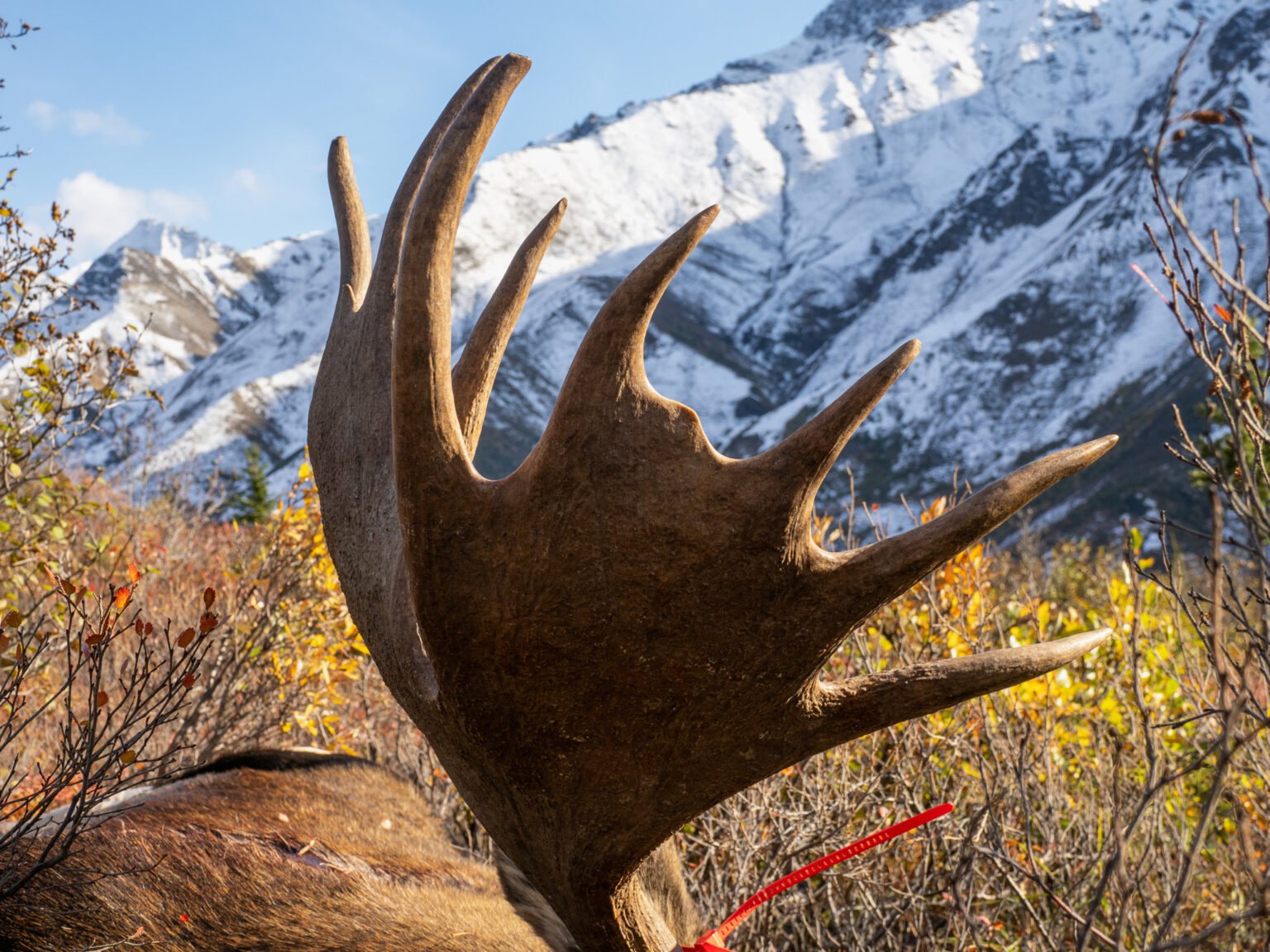
I watched intently as the bull stood up and began raking brush 40 yards above the two cows on the same hillside. He stood confidently, looking in their direction, however, he did not move his feet. As he swung his head back and forth and all I could look at were his massive antlers. To me, this was not just ‘any bull’ — this was a giant.
I observed his behavior while I admired his shiny bright antlers. The moose was clearly of legal size, even without the ‘any bull’ permit. I quickly counted 5 brow tines on one side, and he looked to be easily over 50 inches.
After locating the bull the first time, I could easily re-locate the tips of his bright antlers sticking out above the brush. He had positioned himself on a high-mountain bench, just below tree line on the opposite side of the valley. Earlier that morning, I watched a group of ewes and lambs feeding just a few hundred feet above where this moose was on the same hillside.
This bull was nearly living in Dall sheep country. Going after him in this location would make for a nightmare of a pack out, and was probably genuinely a bad idea. But sometimes, big animals make people do stupid things.
I watched as he wandered 30-50 yards at a time, raking a little brush with his antlers, then bedding down again. He repeated this pattern several times over the next few hours but never left his 75-100 yard radius. He was clearly attached to his harem of cows and calling the bull away from them seemed an unlikely prospect.
I had two choices: I could either wait and see what happens, or I could go to him.
It was too late in the day to make a stalk attempt, especially with the bull being well over a half-mile away. After watching him for a couple hours, it appeared he had no plans to leave. All he needed was right there in front of him. A moment later, I spotted a third cow below him. I began planning a stalk route for the next day.
That night at camp, Terry and I shared the story from our day’s events. After relaying my story, we were in complete agreement — we would leave at first light to make a play on the bull.
The Stalk
As daylight broke, we emerged from the tent to find another cold, frosty morning. A dense layer of fog formed in the valley, completely blocking our view of the terrain below and across. We saw this as an opportunity to move into our glassing position that morning undetected.
We set off down the ridge to a vantage point where we believed we would be able to quickly locate the bull once the fog cleared. Instead of returning to the spot where I spotted the bull the day before, we walked down the ridge another 1/4 to 1/2 mile. We wanted to get closer, and put ourselves in position to make a quick approach if and when we relocated the bull.
As we side-hilled along our ridge, the blanket of fog became even more dense.
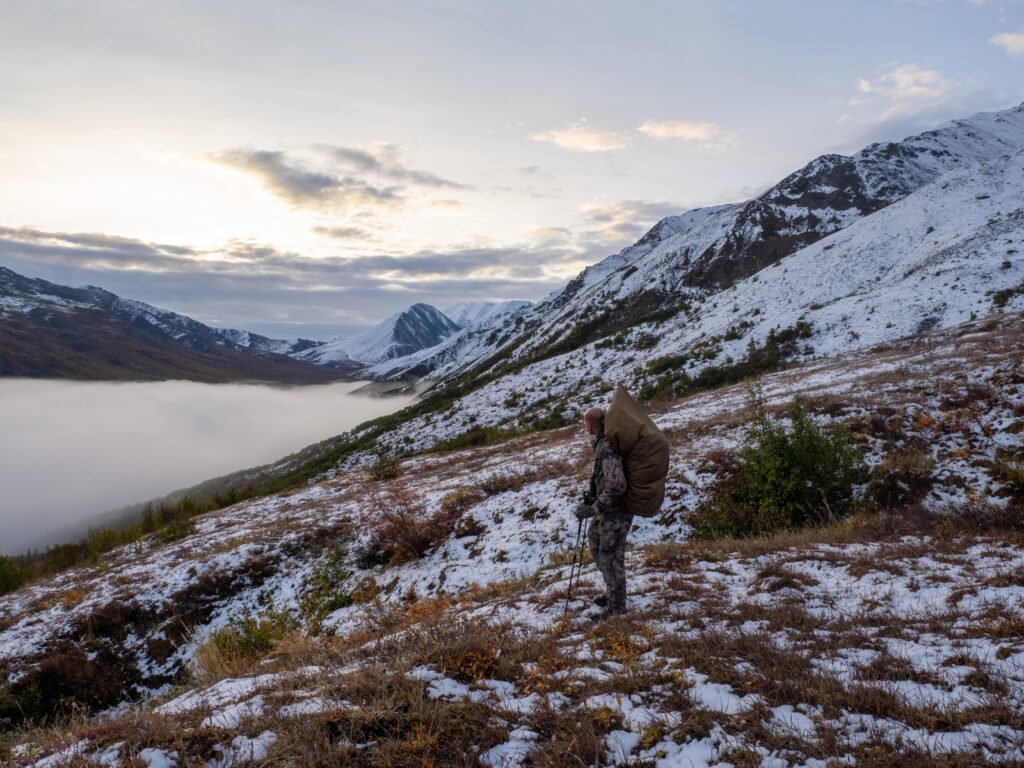
Briefly, a small opening in the fog revealed the bull to be standing in the same spot I last spotted him the day before. After a few second window, the fog closed in and once again he was hidden from view. With an entire day ahead of us, we didn’t want to rush things. We wanted to be certain the bull was going to stay put, and confirm the stalk route and plan was realistic.
We watched the clouds roll by for what seemed like at least an hour, only revealing the bull a couple more times. While we patiently waited for the fog to lift, we went over a rudimentary hand signaling system we would use for Terry to guide me into position from afar.
It took a couple hours of patience, but the fog finally burned off. I was able to see my stalk route clearly, and I took off for the opposite side of the valley.
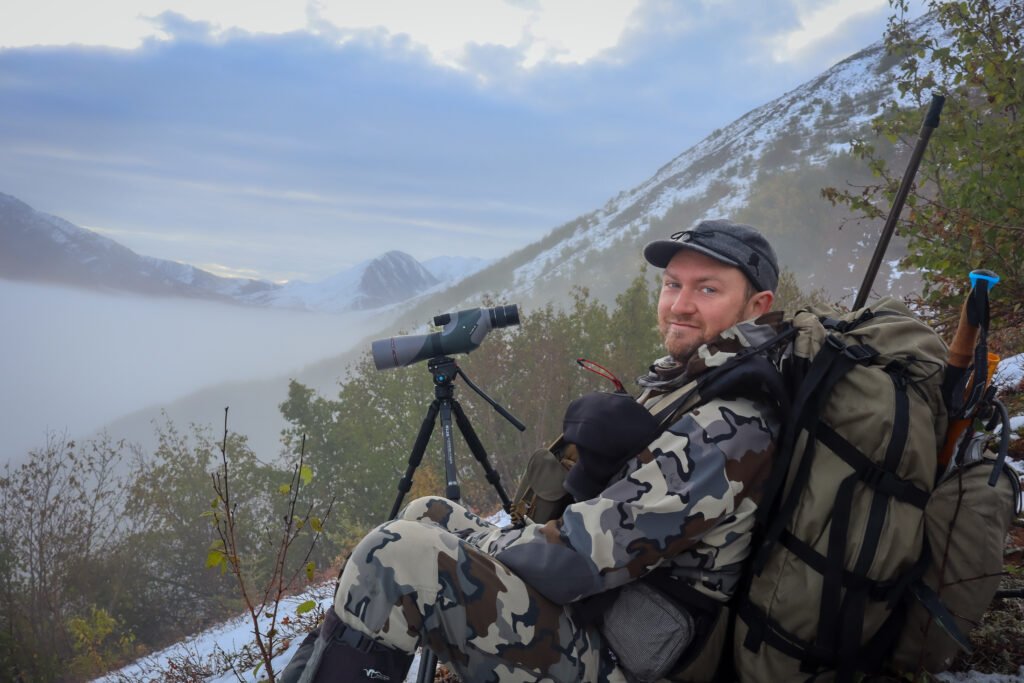
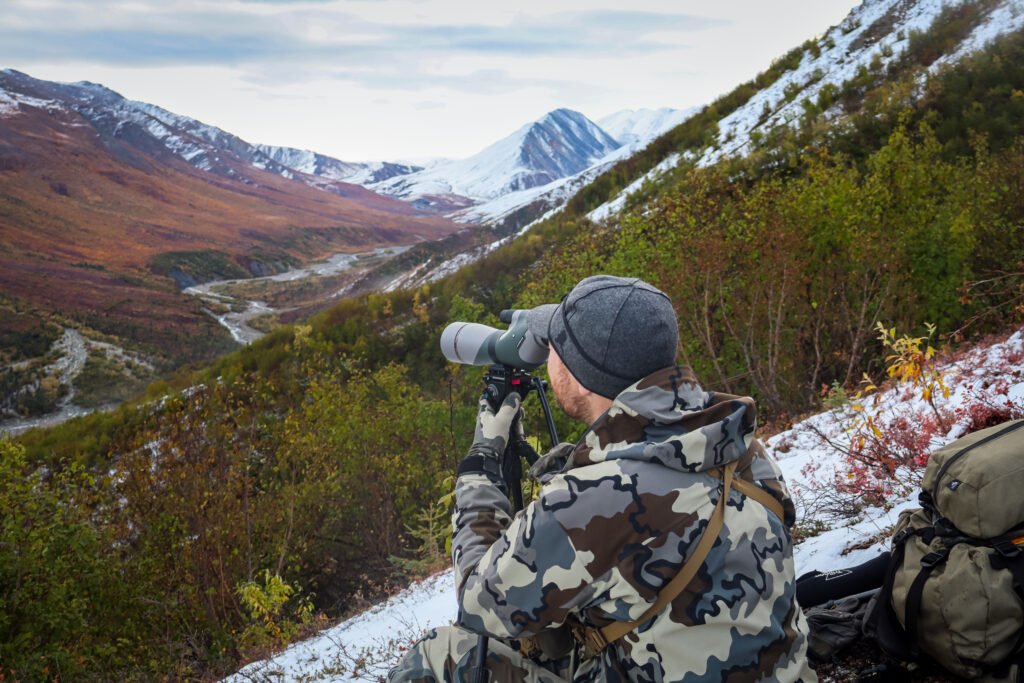
The bull and the three cows remained on the high bench across the valley. I kept tabs on them as I dropped into the valley floor and crossed the drainage to the other side.
I quickly made it to the creek at the valley floor. As I approached, I could see the creek was narrow, fast and full of boulders, but I easily found a crossing location. Once across the creek, I looked ahead toward my stalk route to the bull.
A quick check of the wind direction revealed a perfect set of circumstances. My stalk route was going to keep me downwind of the bull the entire time. Now, I was just hoping the route was as ideal as it appeared to be from a distance. I realized this is rarely the case, but remained optimistic.
As I approached that hill side, the steepness of the approach now towered over me. The drainage route I was committed to looked steep and rocky. The moose were high above me, and the terrain was now too steep for me to see them from my position on the valley floor. As I pushed toward the drainage however, I began to notice horse tracks in the dirt.
As I followed the tracks, I realized they weren’t fresh, but they were leading me exactly where I needed to go. I stayed on them as the drainage steepened. The higher I climbed, the more my respect grew for the horse that made them. The trail rose straight up the route I needed, and I couldn’t help but wonder how a horse had managed terrain like this. These horse tracks were probably from the previous summer, but the line I was following was clearly worn-in over many years of repetitive use. That horse trail gave me the confidence I needed to continue up that steep route.
The steep climb ended fairly quickly as the route plateaued. To my surprise, the drainage leading further up toward the bull was even more gradual with easier terrain than it looked like from a distance. I did a check on the wind direction and it was still in my favor to continue.
From where I stood, I could easily see the front of the bench where the bull had been located above me. I had closed the gap. I ranged the hillside in that general area at about 600 yards. The flat on top of the bench remained primarily hidden from view, but to my surprise, I caught a glimpse of a brown object in my binoculars at the edge of the bench above me.
It was the bull!
He was casually feeding with his head down, walking directly away from me. One visible antler tip was exposed over the hill, confirming it was certainly the bull I was after. My brief, 5-second sighting gave me all the confidence I needed to know I was still on the right track. I stuck to my plan.
With the wind in my favor, I pushed forward. In my excitement, I almost forgot to turn around and see if I could see Terry from where I was. It took a while to locate him through the binoculars but I finally did. He was closely watching me, as soon as he saw me looking at him through my binoculars he gave me the hand signal that it was safe to keep going. I checked back in with him visually a couple more times on the gradual climb.
I quickly made it to the top of the drainage, where I spun around again and tried to find Terry for further instructions. To my surprise, I was unable to locate him. It was like he had disappeared in thin air! I believe what happened, is that the snow that was behind him on that hillside must have melted, causing his camouflage to blend in completely with his surroundings from my distant perspective. I tried for a while to locate him and had no luck. The last hand signal I saw from him gave me confidence the bull was still there, but Terry wasn’t going to be able to guide me to him as we had hoped.
I had a choice to make, continue higher to gain a vantage point from the mountain above, or walk straight at the bull’s last known location. I started toward the high-route, then immediately realized that route put me at risk of been seen so I pivoted to the latter option.
I found out later that Terry was trying to signal for me to stop going up the mountain side and to head straight toward the bull. From his perspective, I was following his signals exactly as they were given. It turned out to be completely by chance, as I never could locate him again after I turned toward the bull.
I put my face into the wind and slowly started a stalk along the bench. I expected I could run into a moose at any second, so I made sure I moved cautiously and deliberately. I was now on the far end of his bench, but the bench was not perfectly flat. Heading in his direction, a small rise of about 10-15 feet kept the far end of the bench completely out of my view. I believed I had to go another 150-200 yards before I would be able to see the other end and possibly see the bull. I wanted to slip in undetected as best as possible, and my biggest fear was spooking one of the cows and completely blowing the entire stalk.
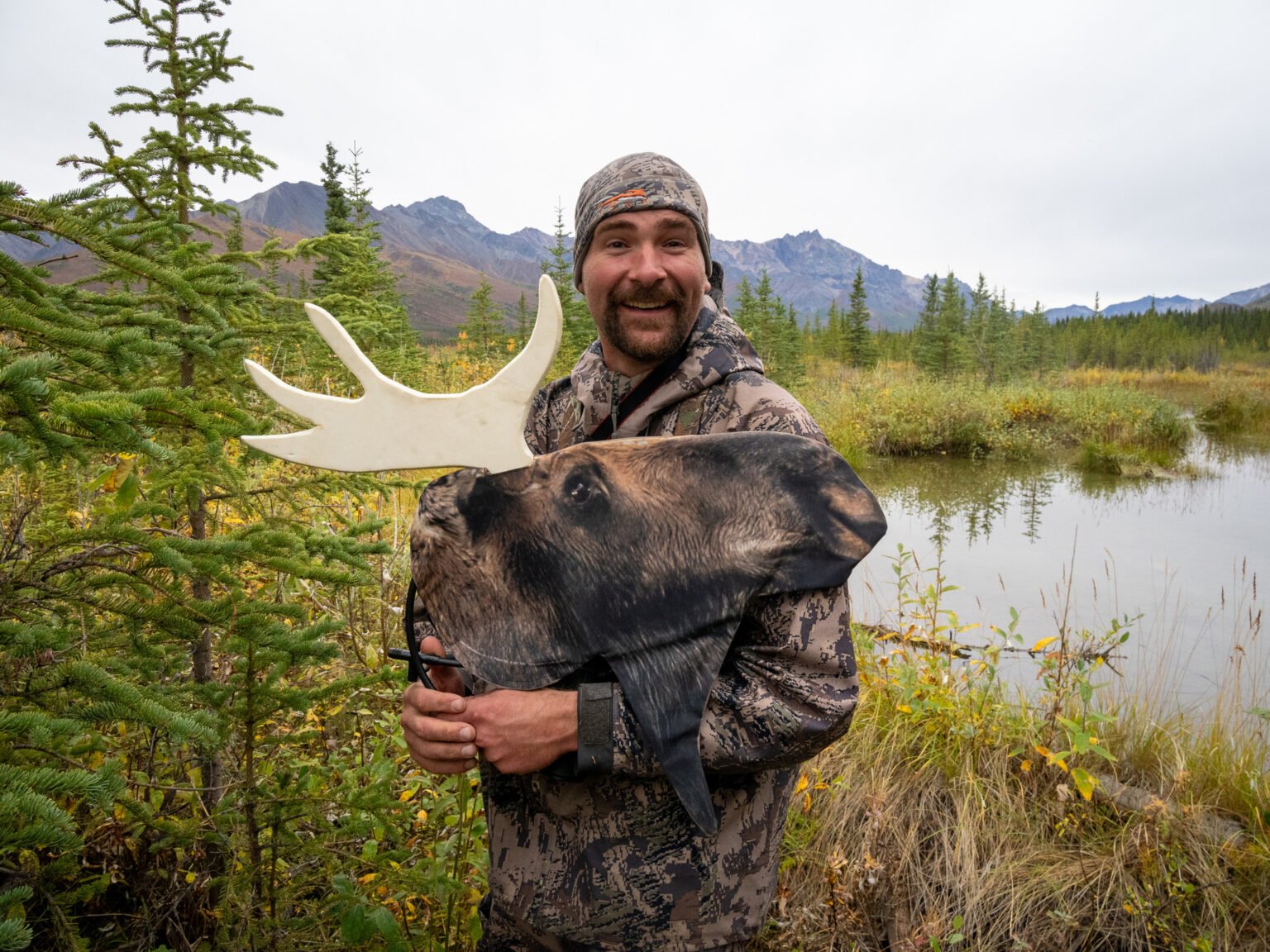
At that moment, I remembered I had Terry’s portable moose decoy in my backpack. The decoy is essentially a cardboard cutout of a moose head with a small set of foam antlers that attached to the top. I decided to pull it out of the pack and get it in my hand, ready to deploy as needed. I thought if I startled the bull, the decoy may confuse him causing him to hesitate and give me just enough time to get a shot. I started walking in the direction of the moose with the decoy held over my head and covering my face as a ‘just in case’ measure.
I could smell a strong moose scent as I closed the gap. The flat the bull was living on was full of small, muddy ponds he was using as wallows. Fresh tracks and moose hair were scattered throughout. Many tracks, big and deep were pressed into the soft tundra.
I knew I had entered his home, and I was hoping he still was unaware of it.
I crouched low while I crept forward, still using the decoy as ‘cover’. The terrain on the flat part of the bench was generally open, but a small band of thin spruce trees and willows to my right appeared to be the best cover available, so I gravitated toward those. I moved from tree to tree, one slow, calculated movement at a time. I carefully scanned ahead for any sign of an antler tip, patch of brown fur or movement that would give a moose’s position away.
A lone spruce tree sat on the crest of the flat, 20 or so yards ahead of me. From that tree, I believed I would be able to see the far end of the flat where I thought the bull was located. My plan was to make it to that tree and hunker down and watch the flat for a little while. I was hoping to catch a glimpse of him at a distance, get setup and make a comfortable shot within 150 yards.
What happened next was quite a surprise!
I followed a well-used game trail to the lone tree. As I closed the gap to the tree, the far end of the flat began to reveal itself. I cautiously moved forward, trying not to make any sudden movements that would gain unwanted attention. I had my rifle in hand and shooting tripod ready. I focused my attention on the far end of the flat where I expected the bull to be. I then knelt down to pull my binoculars up and give everything a once-over.
That’s when the bull appeared. I heard brush snap and the unmistakable sound of antlers sliding across branches as he swung his head in my direction. It appeared he had been bedded down under a spruce tree just on the other side of the crest of the flat. At 30 yards, I was now in a staring contest with this giant bull. He was now standing, staring directly at me. I had no idea what he was going to do next.
I was already in shooting position, but had to manipulate my body position at an awkward angle where I could clearly see him. His body remained completely covered by brush, but I managed to get a somewhat steady rest on my tripod. I say somewhat, because I was then shaking with adrenaline as the situation had escalated to an up-close stare down with a member of the world’s largest deer species.
I could see his eyes and face as he intently started in my direction. Steam rolled out of his nose. The majority of his body, however, remained hidden behind brush.
We stared each other down for what seemed like an eternity. In reality, I believe it was nearly 10 minutes. That is really, really long time to be staring down a 1600 lb animal at 30 yards. I remained ready to shoot, but needed him to step forward so I could get a clear shot at his vitals. Finally, his curiosity got the better of him and he took a step to the right to get a better look at what was looking at him from the brush. That one step revealed just enough of his right side, so I locked the crosshairs just behind his front-right shoulder.
I fired the first shot. The bull reacted immediately as I cycled another round into he chamber. Unfortunately, I realized at that moment that the brush just in front of my barrel was shaking – a clear sign I had hit the willow bush just in front of me when l shot. Now I was worried, because I knew that hitting brush that close in front of my muzzle certainly had an impact on that bullet’s flight. I thought I saw him react to the impact, but now I was second-guessing if I had hit him at all. I was also concerned of what might happen to me if I wounded him and made him angry at this close distance.
The bull spun 180 degrees and stepped out into the open flat to the left. Now from a free-hand position, I fired again. He turned away from me and started trotting away. He probably was trying to make sense of what had just happened, much like I was. At about 60 yards he stopped and turned broadside. Now from a free-handed position, I shot again. To my surprise there was no reaction, so I fired a fourth shot.
The bull broke into a full-speed run and disappeared down the hill off the edge of the flat and out of sight. It all happened so fast, but I started second-guessing whether any of my 4 shots had hit the bull. I walked to where he stood at the first shot and started looking for signs of impact.
As I approached the location of the first shot, I caught a strong whiff of moose odor and realized his bed was just a few feet away from where I stood. A few strands of hair were scattered in his bed, but I could not discern if any of it was shed by my bullet’s impact.
I followed the trail he made as he left and found no blood. I easily found his trail by the wide-gaited tracks pressed deeply into the soft mossy tundra. I followed these tracks to edge of where I watched him disappear.
When I watched the bull disappear, I was thinking one of two possibilities: either he was barely wounded, and I was going to be spending the rest of the night tracking a wounded moose into thick brush, or he could possibly have gone down just over the ledge. My senses were heightened as I approached the edge and looked over.
As I crested the rise, I was startled as the bull stood up just 9 yards away from me. By his side, was what appeared to be a very angry cow moose staring at me while she stomped and thrashed the brush around her. The bull stood motionless, slightly quartering-away, and facing in the direction of the cow. I could tell he was struggling to stand, but I wasn’t sure if my next shot would be a finishing shot on the bull, or a shot in self defense as the cow stomped in anger.
I quickly placed the crosshairs behind the bull’s shoulder and squeezed off one more shot. Thankfully, the angry cow took off down the hillside and disappeared from view.
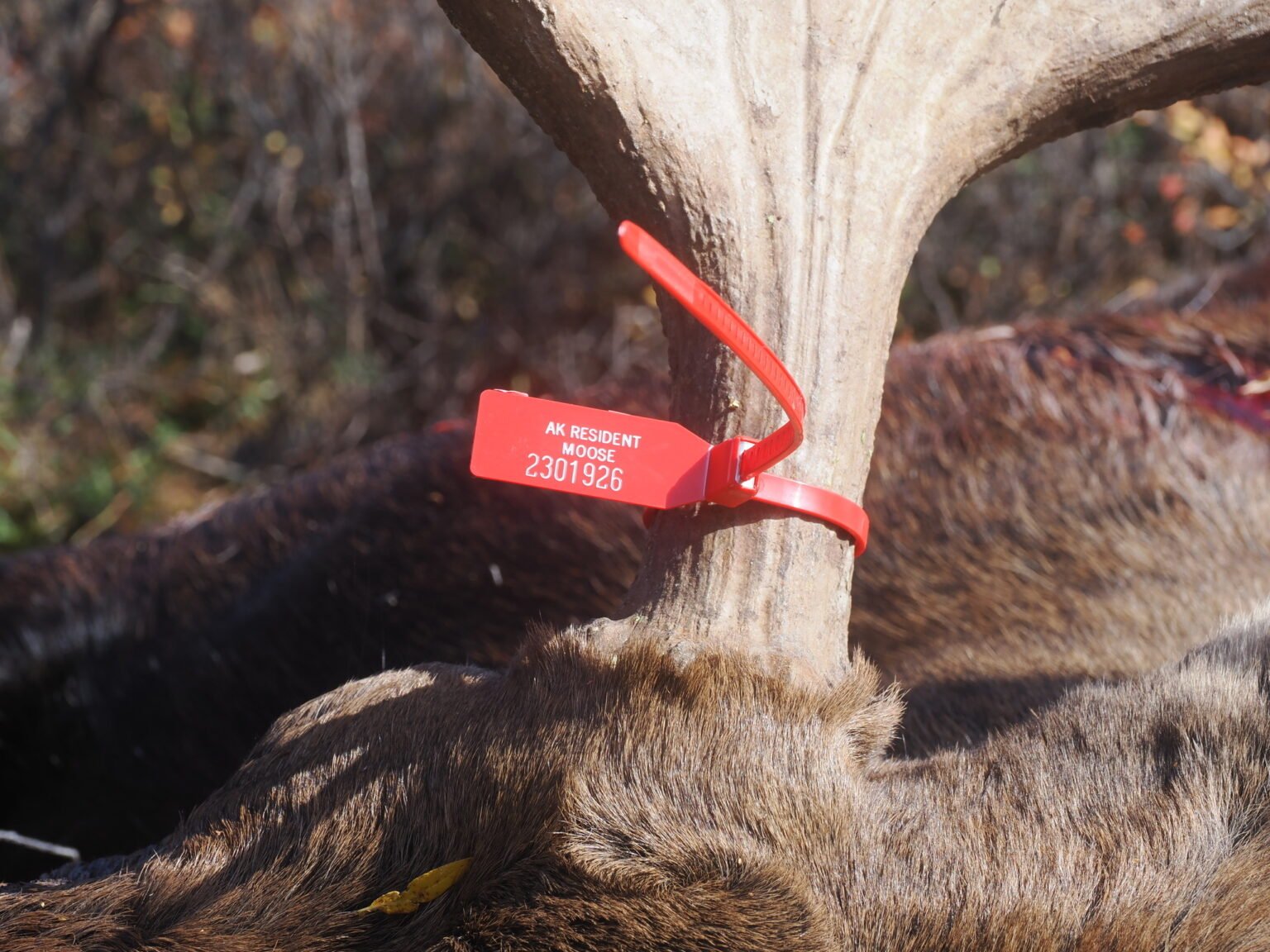
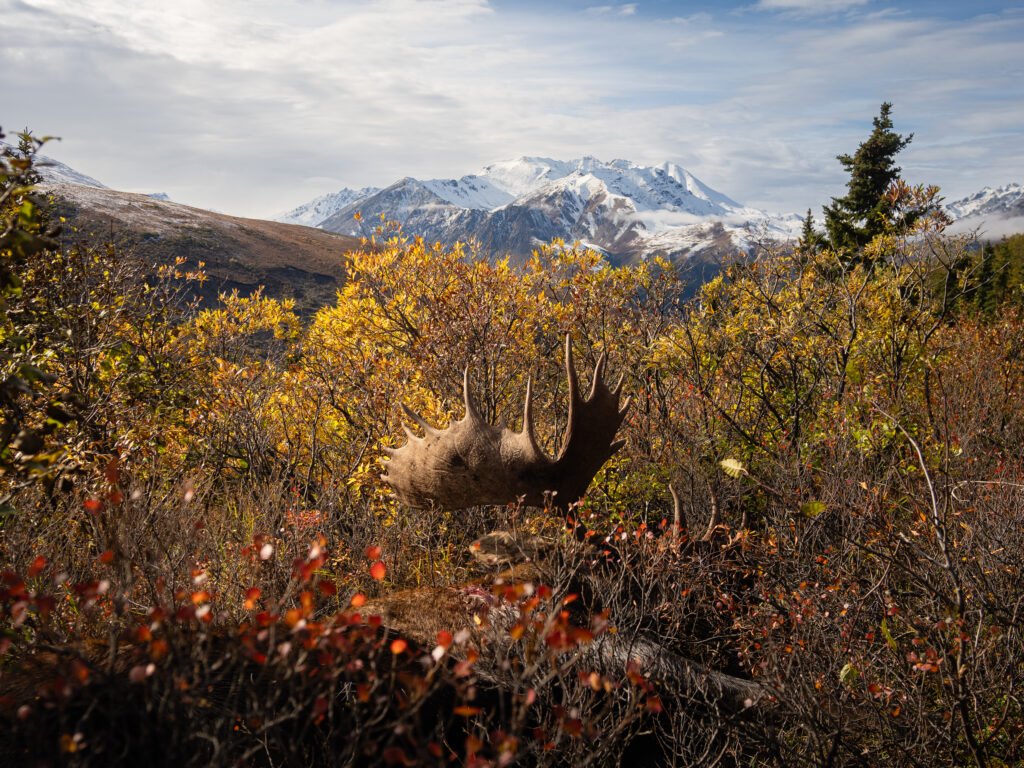
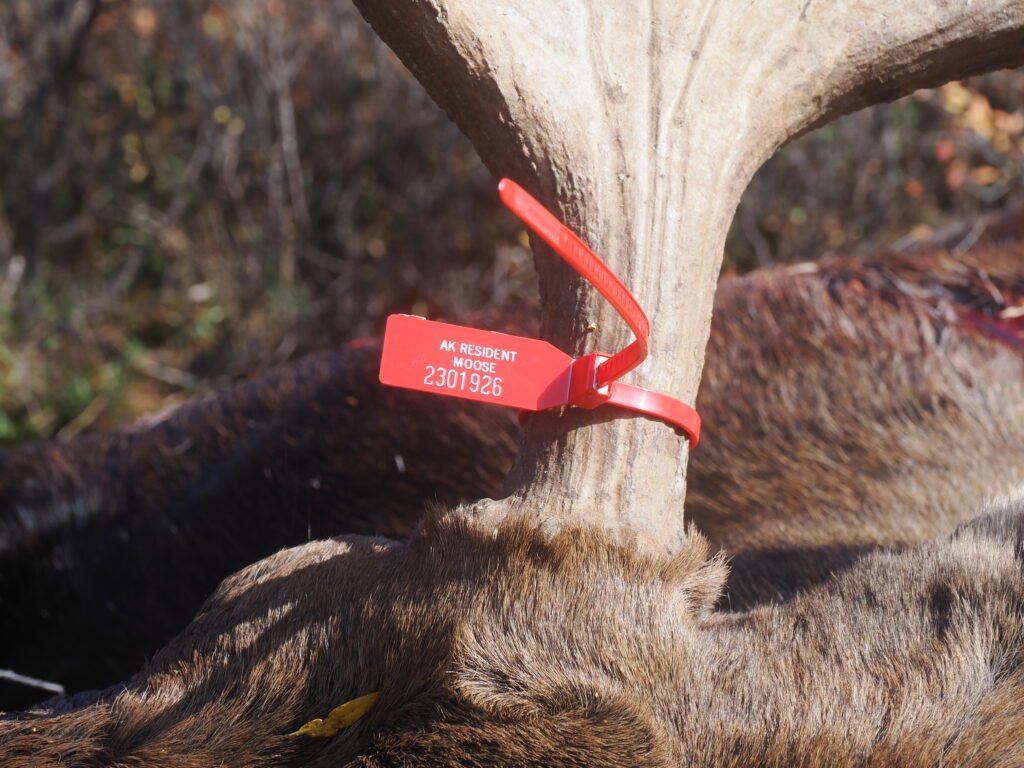
The bull lurched forward, stumbled a few steps, then fell hard on his right side. I struggled to watch as he took his last few breaths. I knew I had found the lungs on the final shot as he struggled to breath. As a hunter, you never want to see this type of struggle, and always seek a quick clean kill. Unfortunately, things are not always perfect. I admired the animal’s unbelievable toughness and felt relief when he stopped kicking.
When I messaged Terry, he already knew the result since he was watching this entire situation play out from across the valley. After a heartfelt congratulations via InReach message, he started heading toward our spike camp location. The plan was for him to bring camp to the river valley below, set it up there and he would then come help butcher the bull.
At that moment as I quietly celebrated and gave thanks for the success on the mountain, I simultaneously realized the type of pack out that laid ahead. I didn’t want to waste any time, so I got to work.
Butchering Beneath the Northern Lights
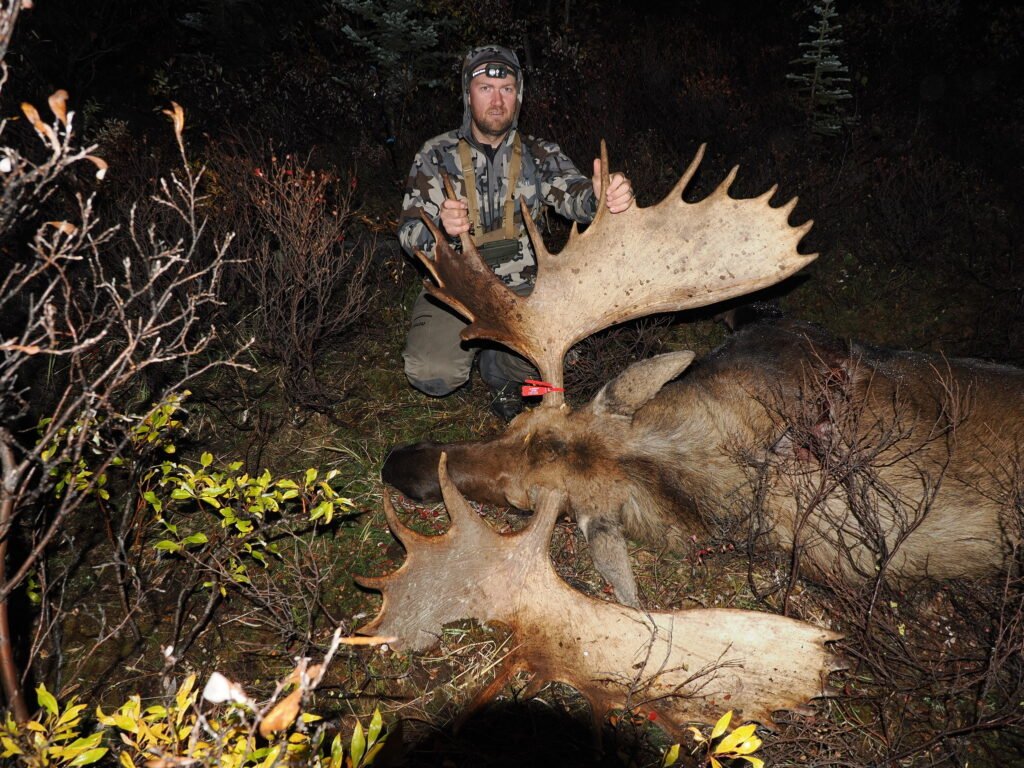
Some of my most vivid memories in the outdoors involve the sometimes long and arduous process or butchering an animal under a headlamp in the dark. This particular night would be one I will never forget for many reasons.
I worked until late afternoon alone, while Terry continued to gather camp from our previous night’s ridge top campsite and made his way up the drainage toward me. I received an inReach message from him that he was getting close, so I headed down to meet him at the valley floor. We setup camp along the creek, and he followed me as I led him to the route back to up to the bull.
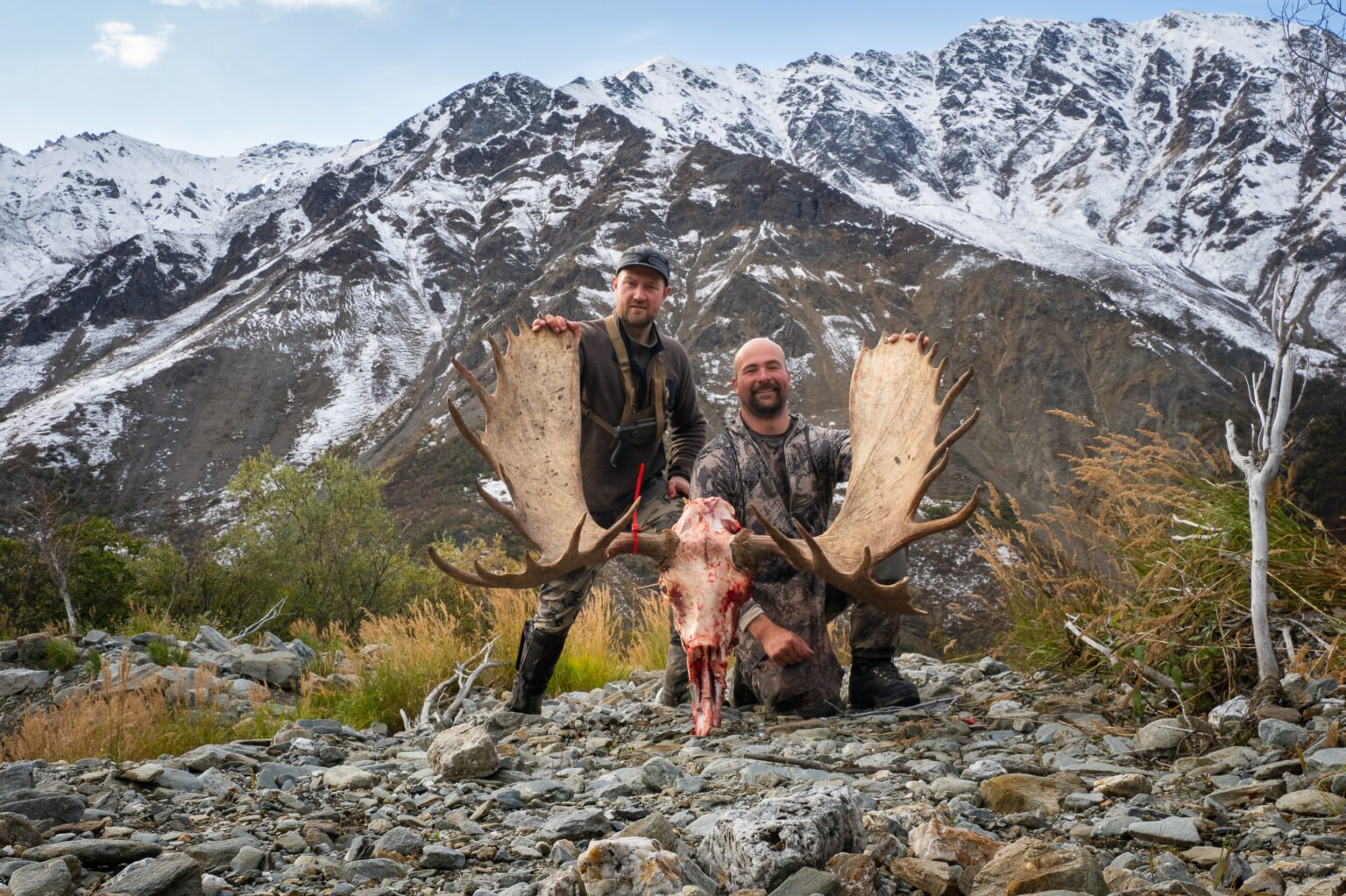
When we started climbing up toward the bull it was late evening, but we were soon climbing in the dark. We navigated via GPS and arrived back at the bench where the bull was after 10:00pm that night. We were relieved when we finally arrived at the kill site, and after a few photographs and admiring his incredible size, we got to work breaking him down.
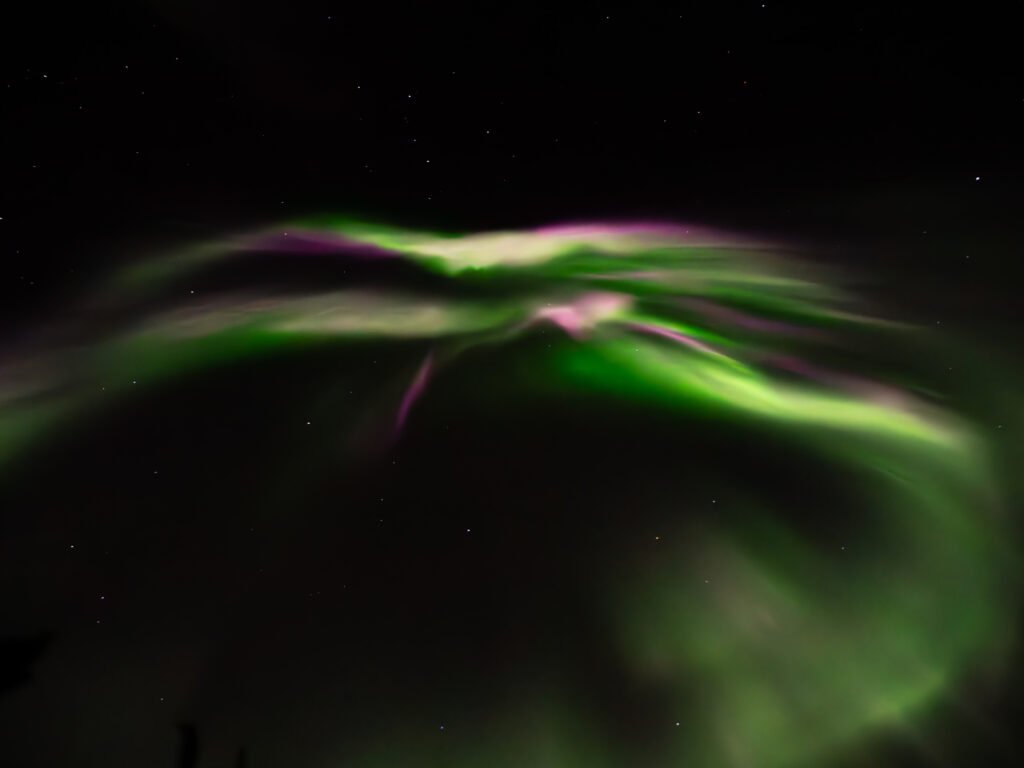
While we worked, we watched a dense layer of fog roll into the valley below, hiding the creek under dense cloud cover. From our position high on the mountain, however, we were looking at clear skies above as far as we could see. A bright moon lit the scene and we were able to work for a while without the aid of our headlamps.
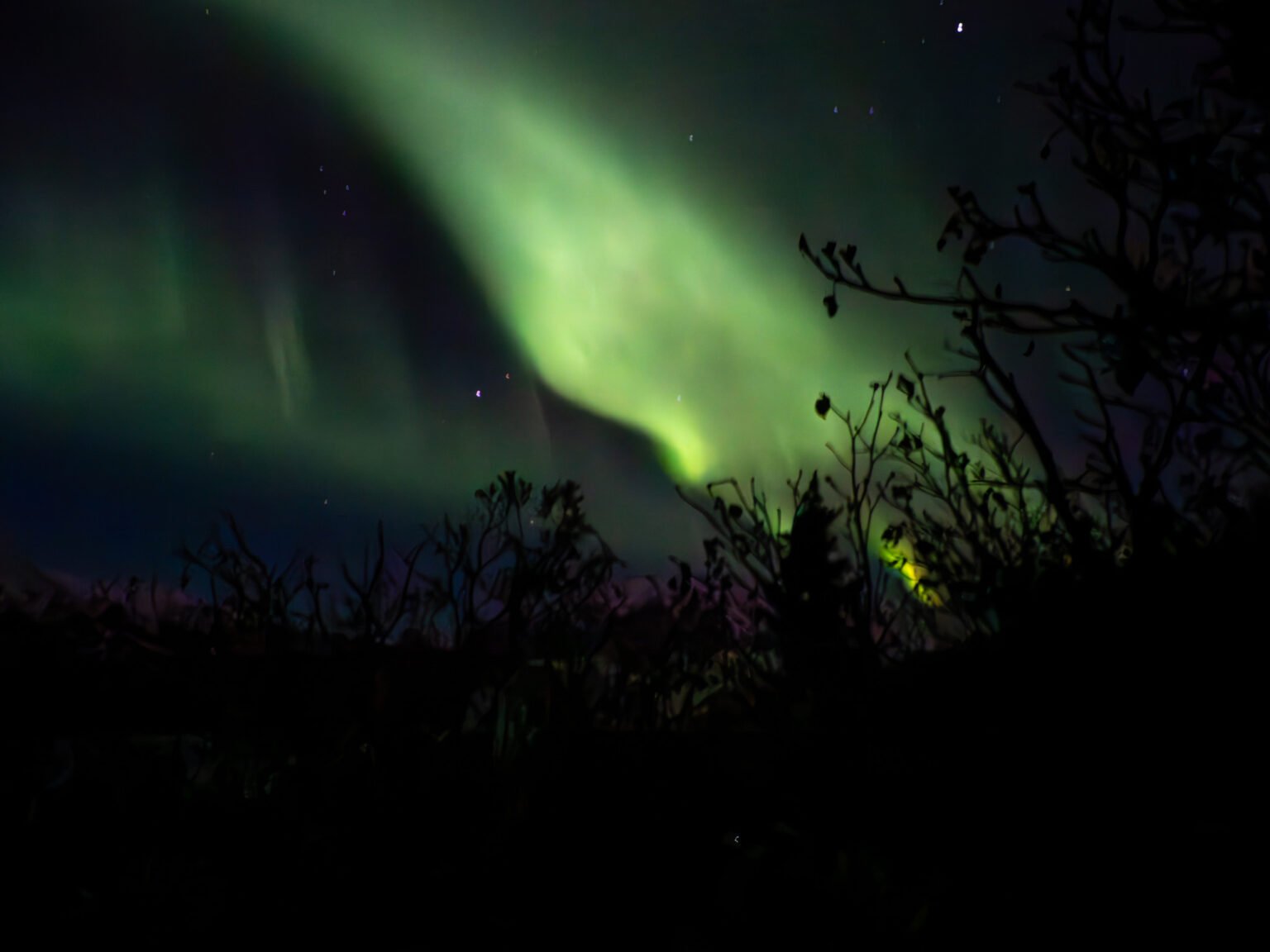
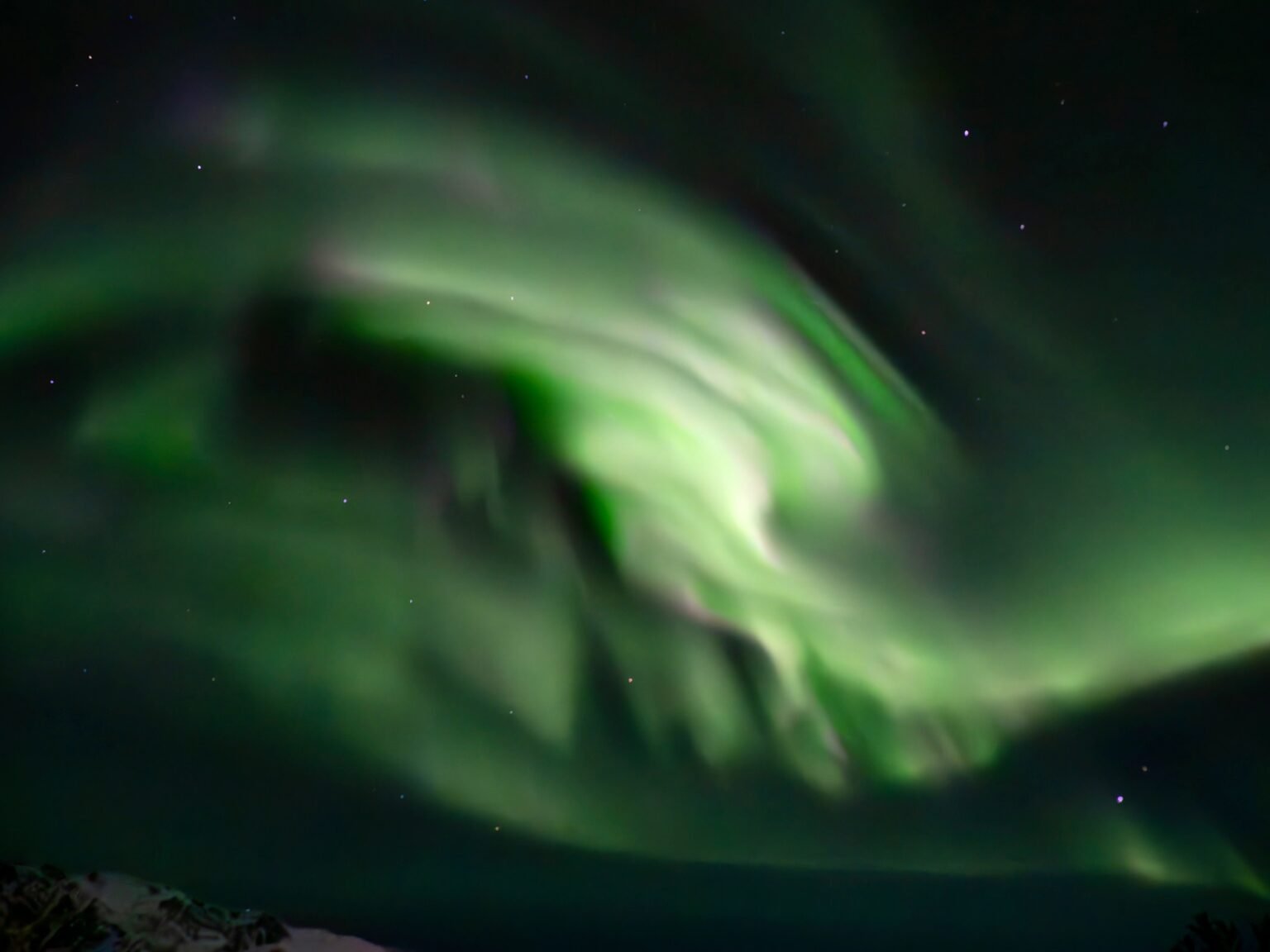
A faint band of northern lights formed as we skinned and quartered the moose. The lights continued to intensify until they turned into such an incredible display that demanded our attention, even from two Alaskan hunters who had witnessed many similar episodes. This one quickly rose to the top as one of the most impressive either of us had ever seen. We were completely in awe of the spectacle.
Our beautiful, peaceful night was about to take a different turn.
As Terry rolled the first giant moose hind quarter into a game bag, I continued skinning the bottom side in anticipation for flipping the moose over and working on the final two quarters. By 2:30 am, we were both fatigued and tired, but knew we needed to keep working through the night to keep our momentum going for our pack out — and to avoid predators intervening with our plans.
I straddled the bull at an awkward angle while I meticulously skinned the hide off with what was becoming an increasingly dull Havalon blade. I wanted to start working the hide from the quarters that were now on the bottom of the bull while I waited for Terry to help flip the bull over. As the hide became increasingly hard to cut, I drew the knife harder until it slipped out of the hide.
I made a loud gasp as I plunged the razor sharp, pointed havalon blade through my pants and into my inner thigh. Terry spun around and immediately knew something was wrong. ‘How bad is it?” he asked. Without thinking, I pulled the blade out as quickly as it had gone in. “Not too bad” I replied. That was obviously not the case, as shortly after I could feel blood pouring down my leg and collecting around the cuff of my boot.
Within moments, we had both of our first aid kits out and were digging for our QuickClot packs – something I am very thankful we had on this occasion. We tightly wrapped the first Quick Clot, but it saturated quickly and only slowed but did not stop the bleeding. Not being a medical professional, the only thing I could think of was to apply even more pressure. With a second QuickClot pack ready, we dressed the wound and wrapped as tightly as we could until the bleeding stopped.
It took an uncomfortable amount of time for the bleeding finally stop, or at least slow enough to manage, and I was thankful that it finally did. As the adrenaline subsided, we assessed our situation and realized we were going to be OK. At least for now. Terry spent the next two hours working on the bull mostly alone as I sat on the sidelines and nursed my injured leg. All I could think about in that moment is how far away our airstrip was, and that I was going to have to figure it out one way or another.
I wanted to help Terry, but knew I needed to be extremely careful. I watched as Terry flipped 1/2 of a moose over by himself. What a beast he is!
Another hour or so passed and I carefully made it to my feet and began helping him again. I was extremely cautious as I kept my leg straight while we worked. I had the bandage wrapped so tight I could hardly bend my knee anyway.
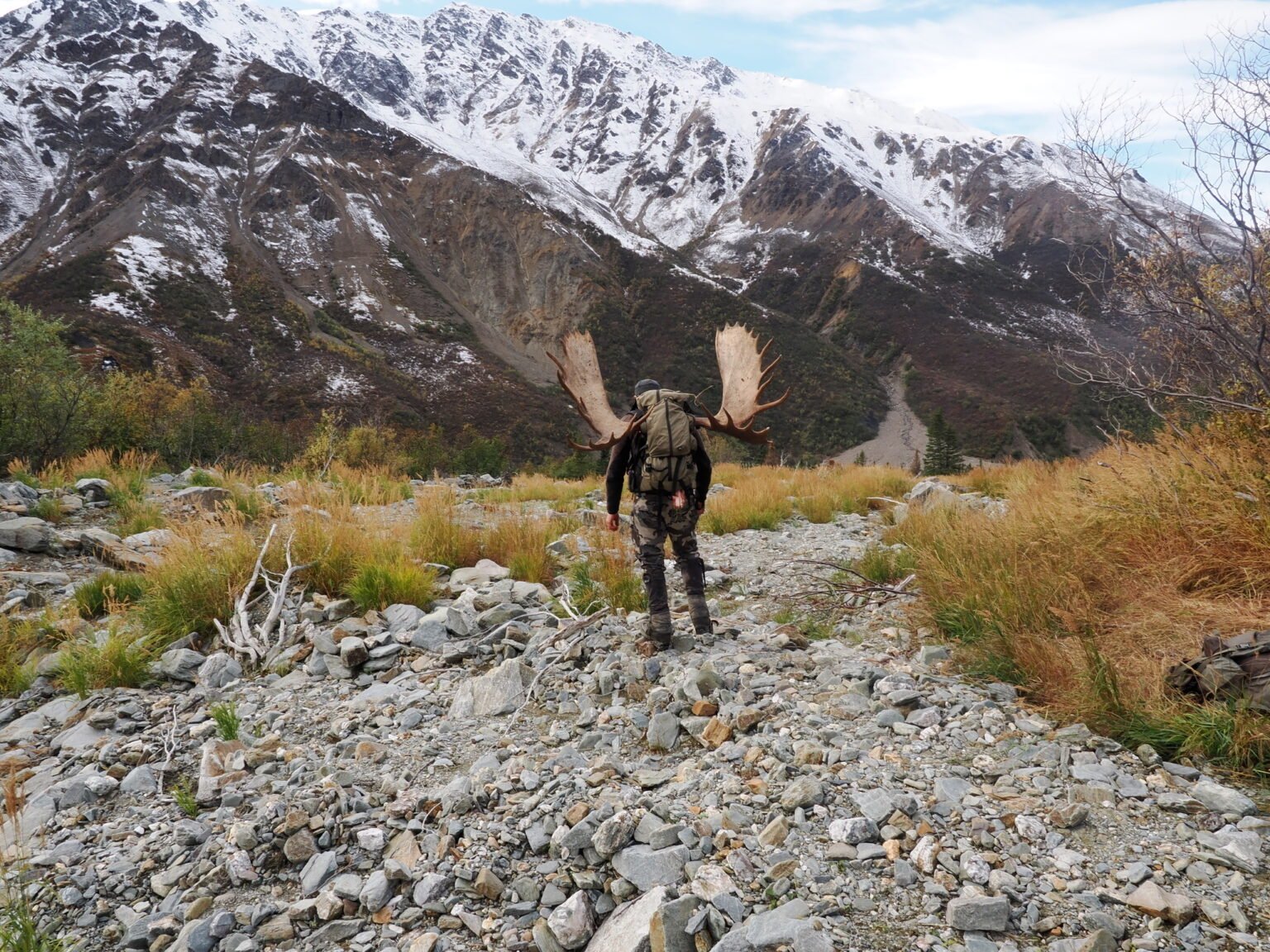
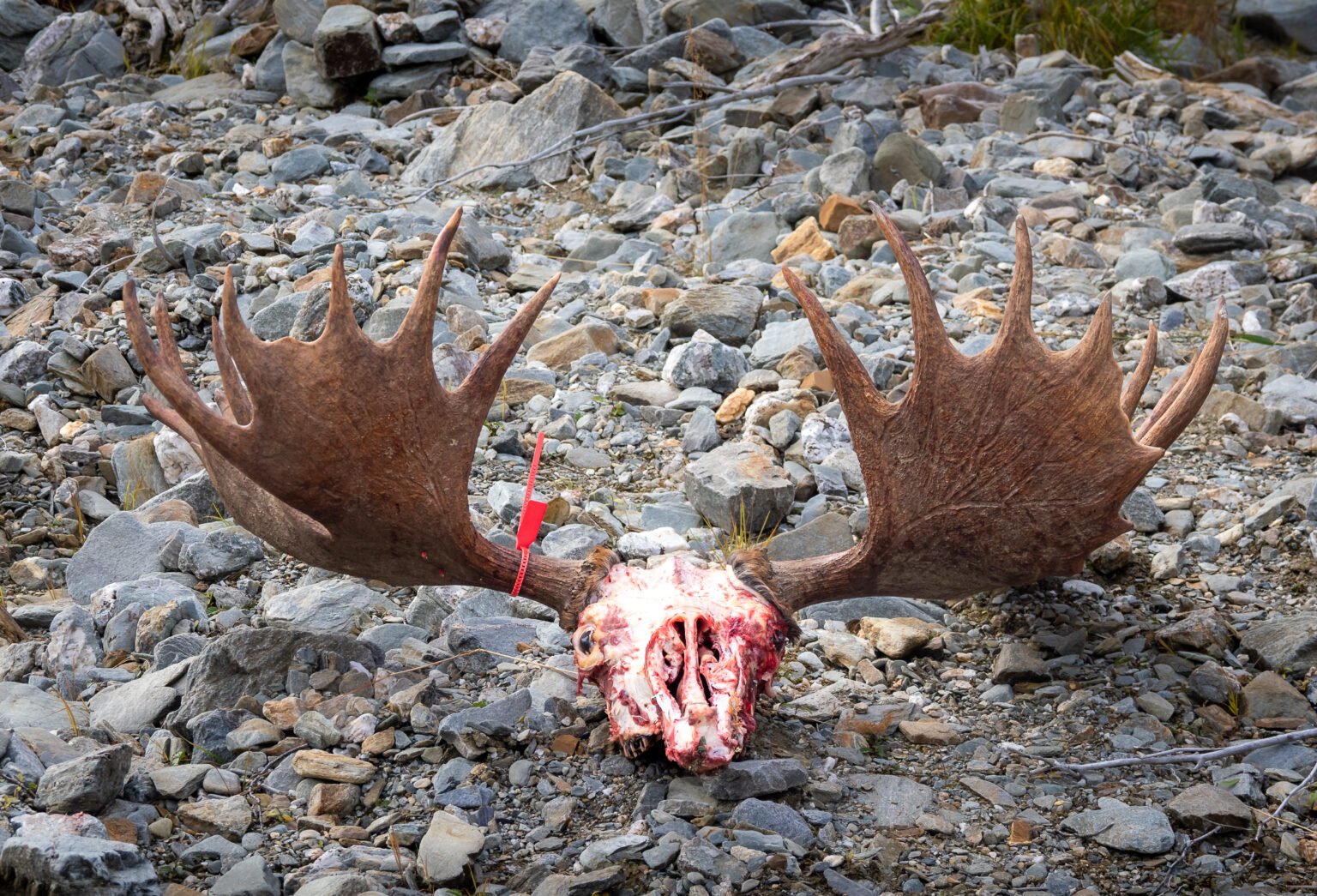
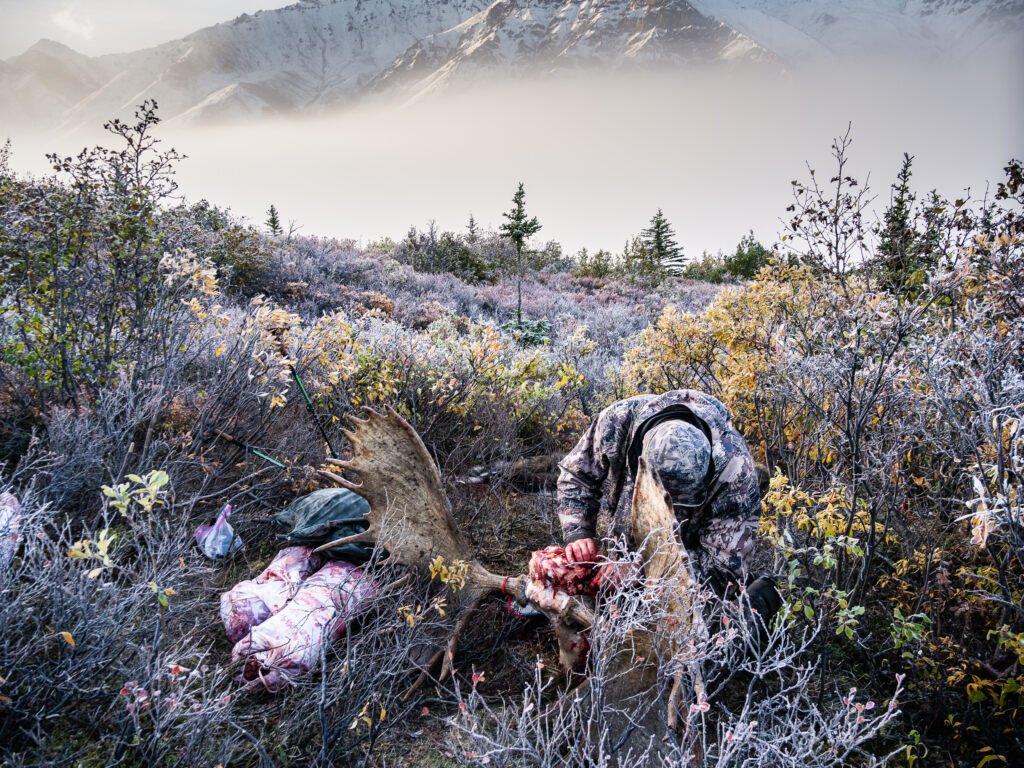
We happily welcomed daylight after our long night on the mountain and began to shuttle our loads of meat away from the kill site. Including the antlers, the moose was 8 total loads. The hind-quarters, boned out likely still weighed around 100 lbs each and were the heaviest of the loads. We shuttled the entire animal about 100 yards from the gut pile, then loaded up to start bringing the first load off the mountain.
I brought my first load down to our creekside camp at the bottom of the valley. Terry stayed up on the mountain and began to shuttle loads off the soft tundra to the gravel drainage, while I headed back to our airstrip camp nearly 4 miles away now to get the pack rafts so we could float our meat back to the strip.
This arrangement allowed for me to stay on relatively flat ground, an important consideration since I could barely bend my left leg. By this time, the tightly wrapped bandage was chaffing into the back of my leg, but I was too afraid to remove it for fear I wouldn’t be able to get the bleeding to stop again. I put up with the pain while I hobbled the 4 miles back to camp.
When I reached our base camp, I quickly grabbed the rafts with a few more days worth of food, then turned around to head straight back nearly 4 miles to our spike camp. Navigating the creek back to the kill site was much faster in the daylight, and I was determined to meet Terry up on the mountainside to help pack the remaining loads.
Terry's mountain Encounter
My round-trip took much longer than expected (you will notice a pattern developing here), and it was around 1:00 am when I made it back to the the creekside campsite. I was happy to find Terry at the tent. He arrived just an hour or two before me, coming off the mountain with one of the hind quarters. He had quite a harrowing tale to tell.
We spent the first part of this trip chasing bull moose, but this time, with the final load of moose antlers from the kill site a moose was chasing him!
A brief account of his story:
As Terry loaded the moose antlers on his back and started heading from the kill site, he heard a crashing sound coming from the brush on the hillside above him.
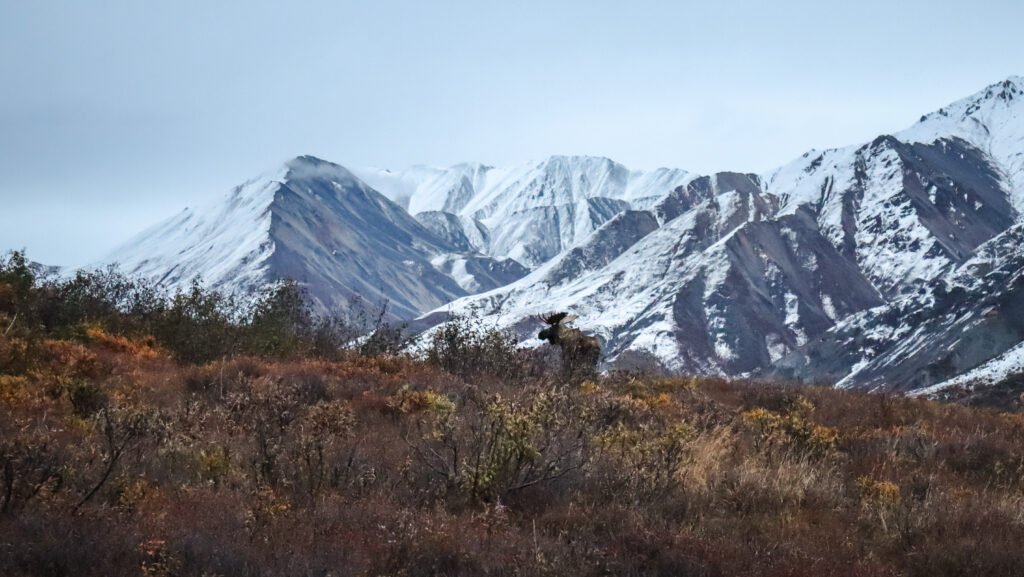
A moment later a bull moose busted out of the brush above him, thrashing, grunting, and was clearly there to challenge the bull that I shot a couple days earlier. Unfortunately for Terry, that bull was now on his back! The bull approached Terry, grunting, horn-walking and brush crashing. Although we had another tag, shooting a second moose at this point was out of the question. We had our work cut out for us with the one we had already.
Terry drew the 10mm pistol I loaned him while we were separated, prepared to react in self defense if necessary. Fortunately, in his brief interaction with the bull he was able to encourage it to leave the scene before we had a second dead moose to deal with. Thank goodness for that.
This was another very mature bull moose, and although it figured out Terry wasn’t a moose he wanted to fight, he was still sure to assert his dominance on the surrounding vegetation before trotting over the next ridge.
The Pack Out
Packing out a moose any distance is a lot of work no matter what . To help explain, I like to think of it like a big story-problem type math equation:
A broken-down, quartered moose plus camp is 8 loads total. If there are two people packing out the moose, and they have to move the moose 1 mile, how many miles will they walk?
In this example, each hunter will make 4 trips total, traveling one mile in each direction. Therefore, each hunter carries up to 135 lbs for 4 miles, then walks with a mostly empty pack for 4 miles.
Answer: Each hunter will walk 7 miles to move the moose 1 mile.
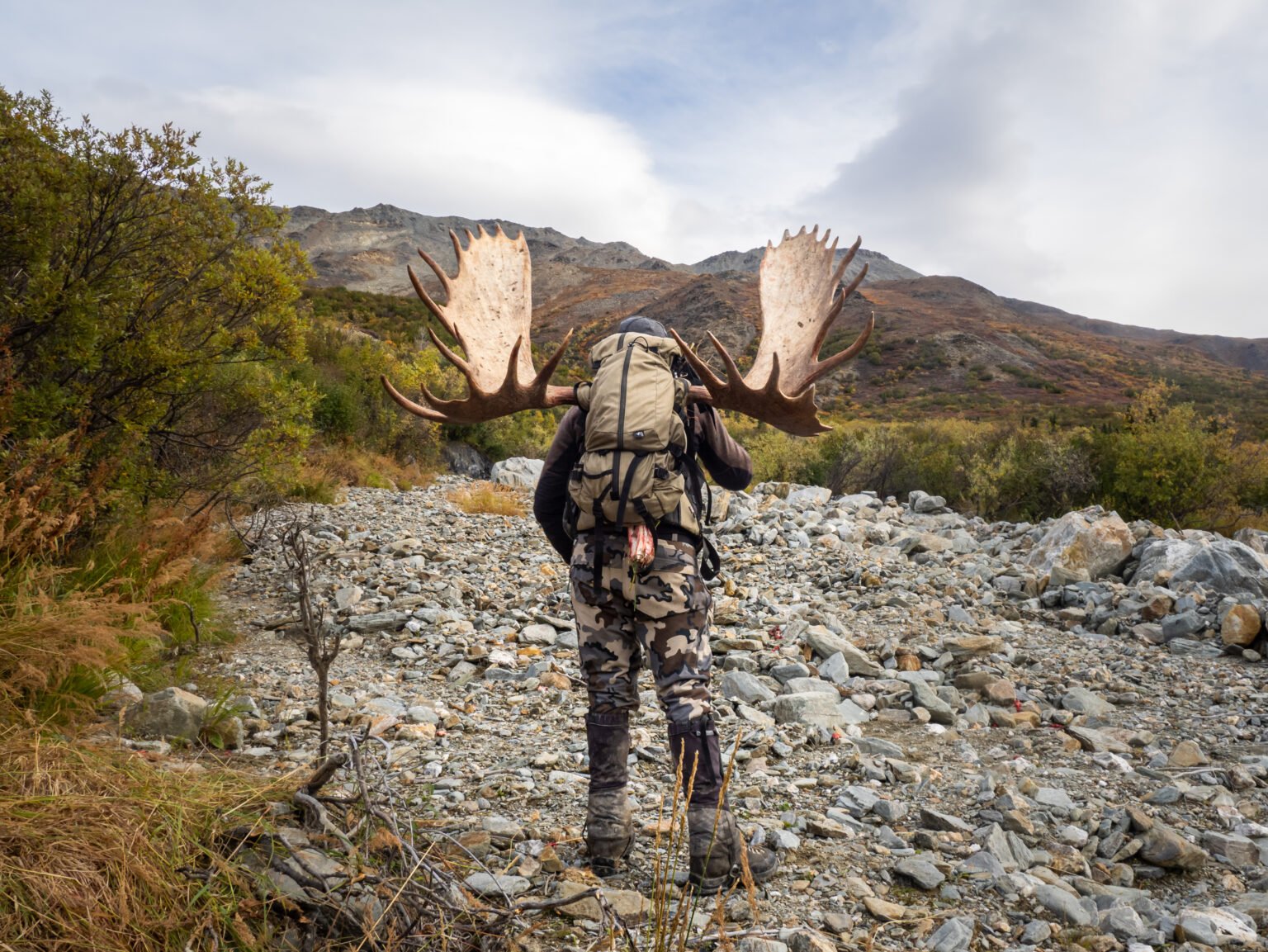
What are the 8 loads? Well, you have two hind-quarters. Even when boned-out, the hind quarters of a mature bull moose will easily weigh over 100 lbs. I believe this one was closer to 120 lbs per boned-out hind quarter. Next are the front quarters. On a big bull I estimate those to be around 75 lbs or more. The backstraps, inner loins, rib meat, shanks and trim from the carcass will easily be another 150 lbs, in this case split into two separate loads. Then the antlers themselves — left on the skull with the bottom jaw removed is another 65 lbs. Finally, the remainder of the camp gear is a full load as well.
I eventually weighed all the meat before processing, we had hauled a whopping 598 lbs of boned-out meat!
I bring this up to illustrate how important the river is, and having the ability to float the bull out of the valley as opposed to having to carry it.
At 4:00 AM on September 16th, after a short sleep, we headed up the mountain to pack the remaining loads of moose meat and antlers back to the creek’s edge. Terry had spent the entire previous day moving the remainder of the moose from the long flat where the moose died, to the rocky drainage that would allow us the most obstruction free route.
We kept a good pace considering how fatigued we were, going up the mountain and back down two more times until we arrived at the meat stash for our final load. A sense of relief came over us as we started down hill with that final load on our backs.
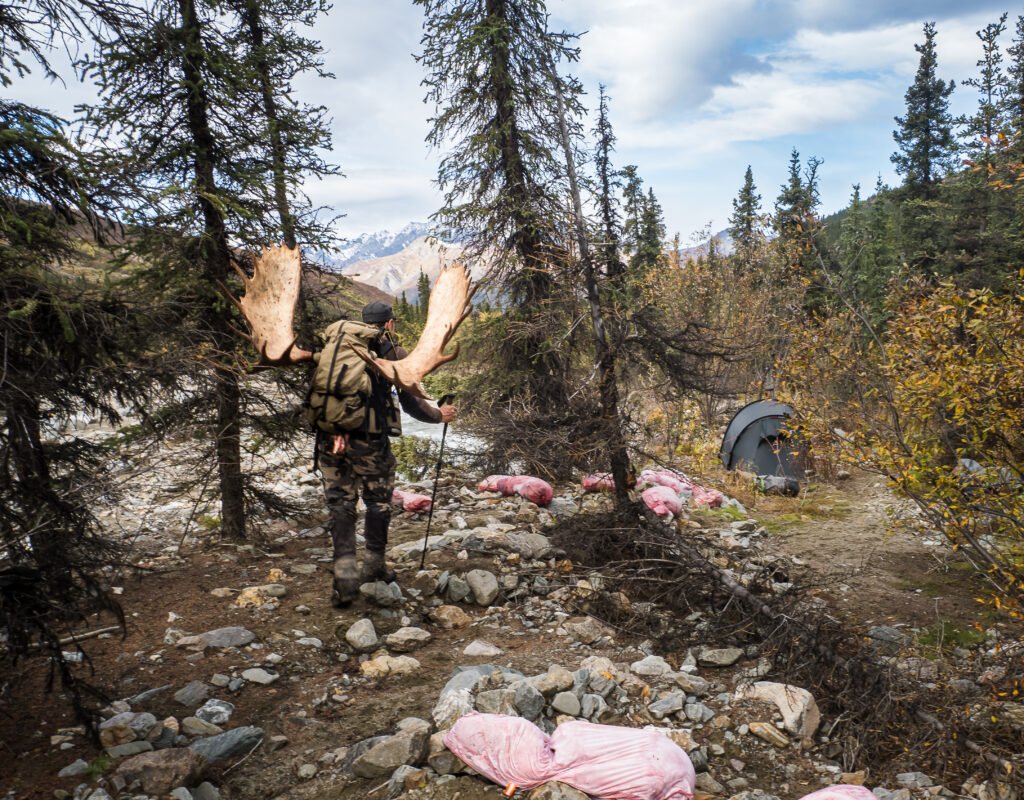
We celebrated our milestone with the bull in its entirety on the creek side. As we broke camp and inflated the rafts, I started to have doubts that we would be able to float these incredibly heavy rafts through this swift, shallow water. With the task now immediately in front of us, I was feeling much less optimistic as I started at the flowing water.
Based on the title of this story, I’m sure you can guess what happens next.
We pushed the loaded rafts into the creek’s edge, but kept them firmly seated on the rocks until we were completely ready. Terry got to be the guinea pig on this occasion, and I watched Terry’s attempt to begin the float. Immediately, he struggled to keep his raft from capsizing as it hit a boulder which turned it sideways almost immediately. My heart sunk as I watched the struggle. I knew we had mis-judged this section of the river. There was also nothing I could really do to help him.
Terry hopped from side to side of the creek as he attempted to keep the raft upright. The intense noise from the rapids made it challenging for us to communicate, and the yelling to each other just heightened the tension of the moment. I decided to try my luck with floating my raft, but only made it about 20 yards before I had to run down to help Terry avoid yet another near-capsize event as water poured over the side of his raft again.
With the weight of the water in the raft, it took two of us to tip it upright and pour out enough to keep the raft afloat. We were both starting to voice our concerns that this section of river was simply not float-able. It’s something I am sure we were both thinking for a little while now, but didn’t want to admit it. That would mean we would have to do the unthinkable — the airstrip remained way too far away to carry this meat all the way.
Something that began to weigh heavy on our minds, was wondering if we had gotten us into a situation where we were going to run the risk of meat spoilage before we could safely get it out of the field. Aside from the fact that we both consider wasting game meat to be a terrible thing to do, it is also illegal to allow game meat to spoil in the state of Alaska and can come with hefty fines for doing so.
With this on our minds, I returned to my raft, where I attempted to follow his lead. Of course, I ran into the same issues. The weight distribution in my raft was slightly better and less prone to tipping over, but after those first few terrifying minutes of the float, I had to pull off to the side to reassess.
We had a brief discussion and came up with a new plan. We decided we would be better off carrying everything about another 3/4 of a mile downriver where a short section of the creek carved through the seemingly treacherous canyon. The particular section would have required a portage anyway, so we decided to pick up and carry everything to the start of that canyon.
If you recall our “moose math” from earlier, it is easy to understand our concerns as we continued to carry these loads farther and farther on our backs. Floating the bull back to the airstrip was supposed to be the easy part. Now, with our airstrip still over 3.5 miles away, we were starting to get concerned.
This had all the potential of turning into a legitimately bad situation, and there was nobody to blame but myself. I was so focused on killing a bull that I had possibly ignored the likelihood that this creek was not as ‘floatable’ as I wanted to believe. In my defense, however, it looked much different from the ridge top 600 feet above.
Just a day earlier, I had followed the creek back part of the way to our air strip base camp to grab the pack rafts. During that trip, I recalled that the creek mellowed and widened slightly below this canyon. From there, we would certainly be able to float, we thought. With our pickup date now looming just a couple days away, it had to work.
Reluctantly, we deflated the rafts and sorted all of our gear back into packable loads.
The grind continues
Load after load, we carried the bull and our gear to the beginning of the canyon section. We dropped our gear in a pile on the gravel bar, using it as our new stash location before continuing with the loads along the steep canyon wall. As Terry went back for the final load up river, I decided I would start carrying the gear through the portage and down river.
Walking beside the creek along the portage came with its own set of challenges. The ground was steep, but a semi well-used game trail helped guide me along the route. There were no direct routes however, and the game trail quickly led through a network of dead-falls and moderately painful bushwhacking.
After the first load through the portage, I knew I had to make subsequent trips more user-friendly, so I cut a few dead falls and overhanging branches on each pass.
While Terry and I were separated, we came up with a system of maintaining regular communication with each other. On even-numbered days, we contacted each other on the hour at even hours. On odd-numbered days, our check-ins were at the odd hours.
We hauled independently well into the night, and I was determined to get the bull to the downstream side of the drainage. I received an inReach message from Terry just after 1am, and he was going to take a short nap. While I kept pressing on, I made a few more trips and I was making my way back toward Terry when he texted me – by 4am he was already awake and ready for more.
At this time, the sun had already started to rise and I still hadn’t slept since the previous night. I made a return trip through the portage, then back toward Terry to help grab the final load from our raft’s final location.
Now without the aid of the river, now we were not only packing a moose out, but we were now packing out the rafts that we had carried in to float with as well. The rafts added a 9th load to our packout.
The antlers were always the final load from the moose each time we shuttled gear from one place to another. I was relieved when I saw them staged at the upper side of the canyon, awaiting a shuttle through the portage.
Terry met me at the portage and we decided the two of us would wrestle the giant moose rack through the brush together. We spent the next hour crawling on our hands and knees, getting caught on every alder branch in our path, and generally just getting frustrated with how slow and painful the progress was. Maybe this was poetic justice for the bull — one final chance to fight back, and at the moment he seemed to be winning.
We were completely relieved when the entire moose was past the portage and we were looking ahead at a wide-open creek bed in front of us. While Terry went back through the portage to gather his final load of camp gear, I set forth to get my raft setup once again and start “floating”. I was going to make an attempt at it, anyway.
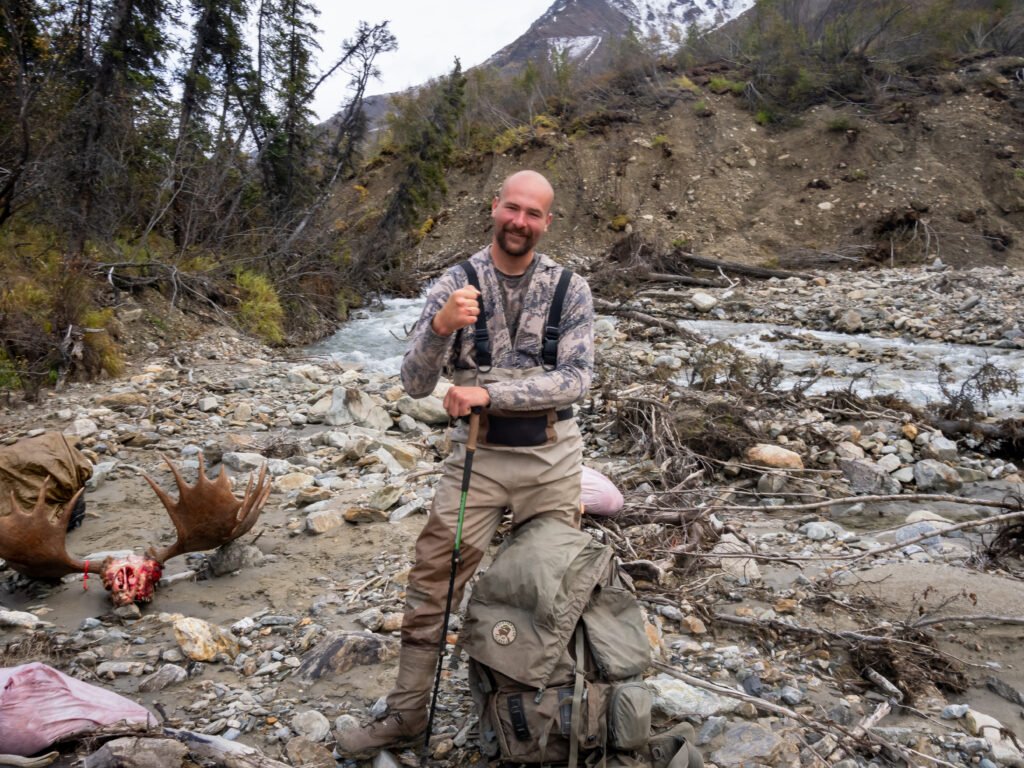
On my previous trip up the creek, I walked back as quickly as i possibly could with a wounded leg to get our rafts, avoiding the creek crossings as much as possible. In the few places I crossed, there appeared to be plenty of water to float. Now that the actual task was in front of me, I realized that my optimism had deceived me.
I had to give it a try anyway, so set the raft up once again and loaded my half of the bull on top. I strapped it down tight and shoved the raft into the current once again. Now in a gentler current, the raft simply came to a hard stop, stuck on the bottom. I got in front of the raft to drag it forward into slightly deeper water. As the raft hit the current, it immediately caught the rapids and wanted to be drawn out to the center of the creek, sticking itself on a large boulder and turning sideways, filling with water.
I managed to get the raft out of this situation, and make a little progress downriver. After another 50 yard stretch that went somewhat smoothly, I decided I wanted to walk up and scout the river ahead of me.
I pulled the heavy raft up on the side of the creek and proceeded to walk down river. Two separate braids of the river forced me to choose a route. After scouting, I realized I didn’t have much of a choice. One route appeared possible, the other did not.
Unfortunately, even in the best looking water in this section, the boat was too heavy, the water was too shallow, and the current was too fast. I was moving at a pace of about 50 yards per hour, and constantly risked losing everything to the river each time the raft got stuck sideways on yet another boulder.
I then tried ditching half of my load, thinking I could float a lighter load easier and just take multiple trips. That plan was met with just as much disappointment. Frustrated, and extremely tired, I finally decided it was time to setup the tent and take a nap.
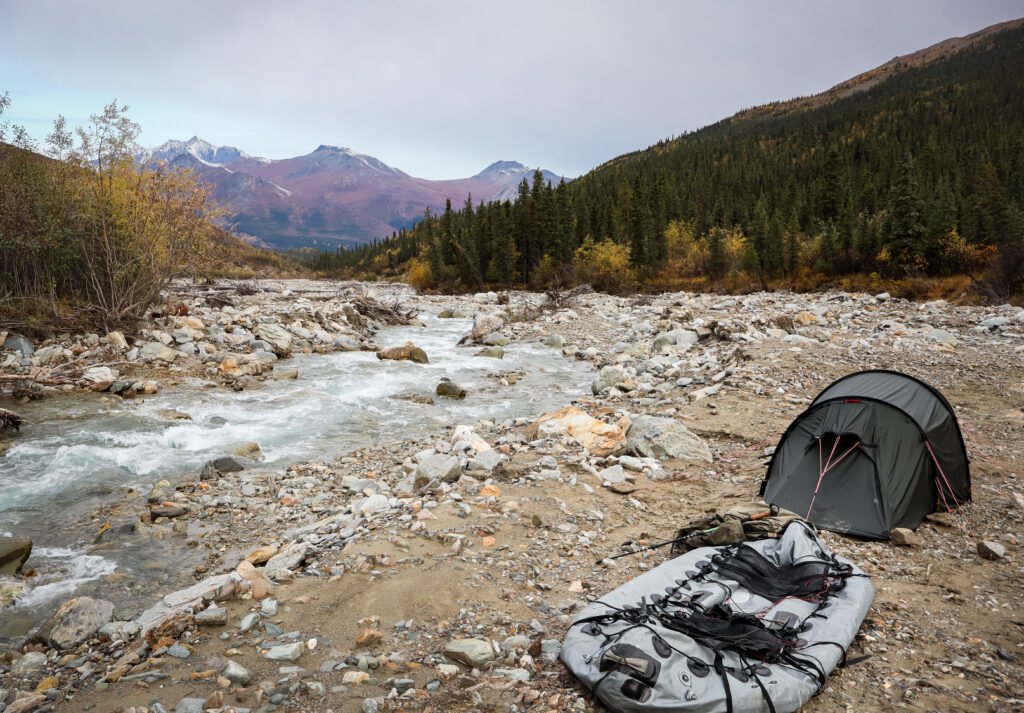
After a couple hours of sleep, Terry had arrived with another load from up river. Just two loads remained upriver, so we left together to go back and bring the final two loads to the campsite.
As we walked, we discussed the reality that laid ahead. The moose math now really started to weigh heavily on us – we were within three miles of our pickup location, but with our scheduled pickup now only 24 hours away, I knew there was no way we would make our deadline. I messaged the flight service and told them we would need an extra day.
Unfortunately, that was the moment where we finally admitted the rafts would be more trouble than they were worth. We were now committed to carrying the bull all the way back to the air strip.
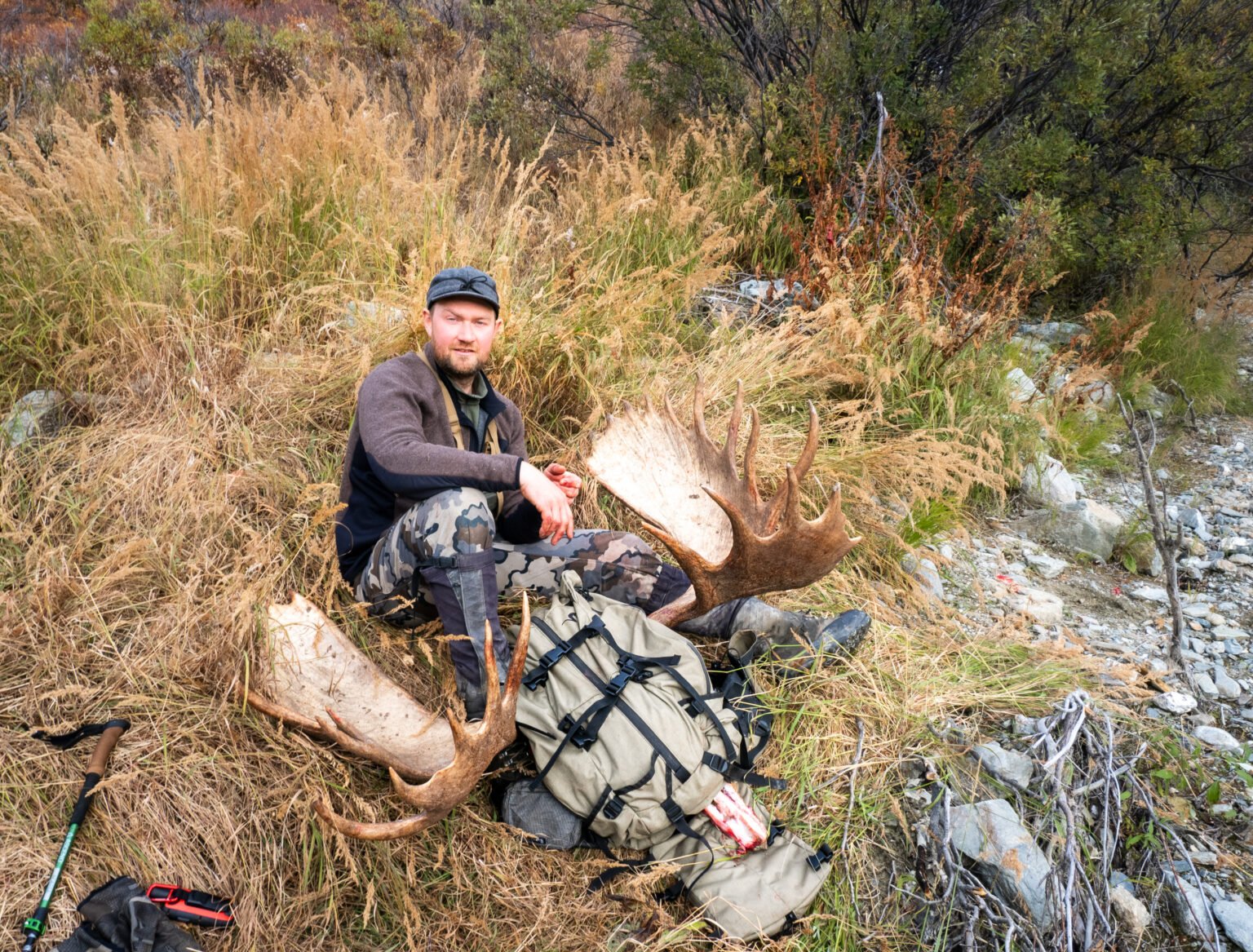
A four mile pack out with a moose! That is something neither one of us ever considered possible, and after doing it I can confidently say I will never do it again and do not recommend it.
What followed that remains mostly a blur until today. At that point, all nine loads were in one place and seeing everything in one spot really put the work ahead into perspective. It was an impressive, giant pile of gear and moose meat. We were now racing against the clock to get all this stuff back to the airstrip, and knew we had to get moving.
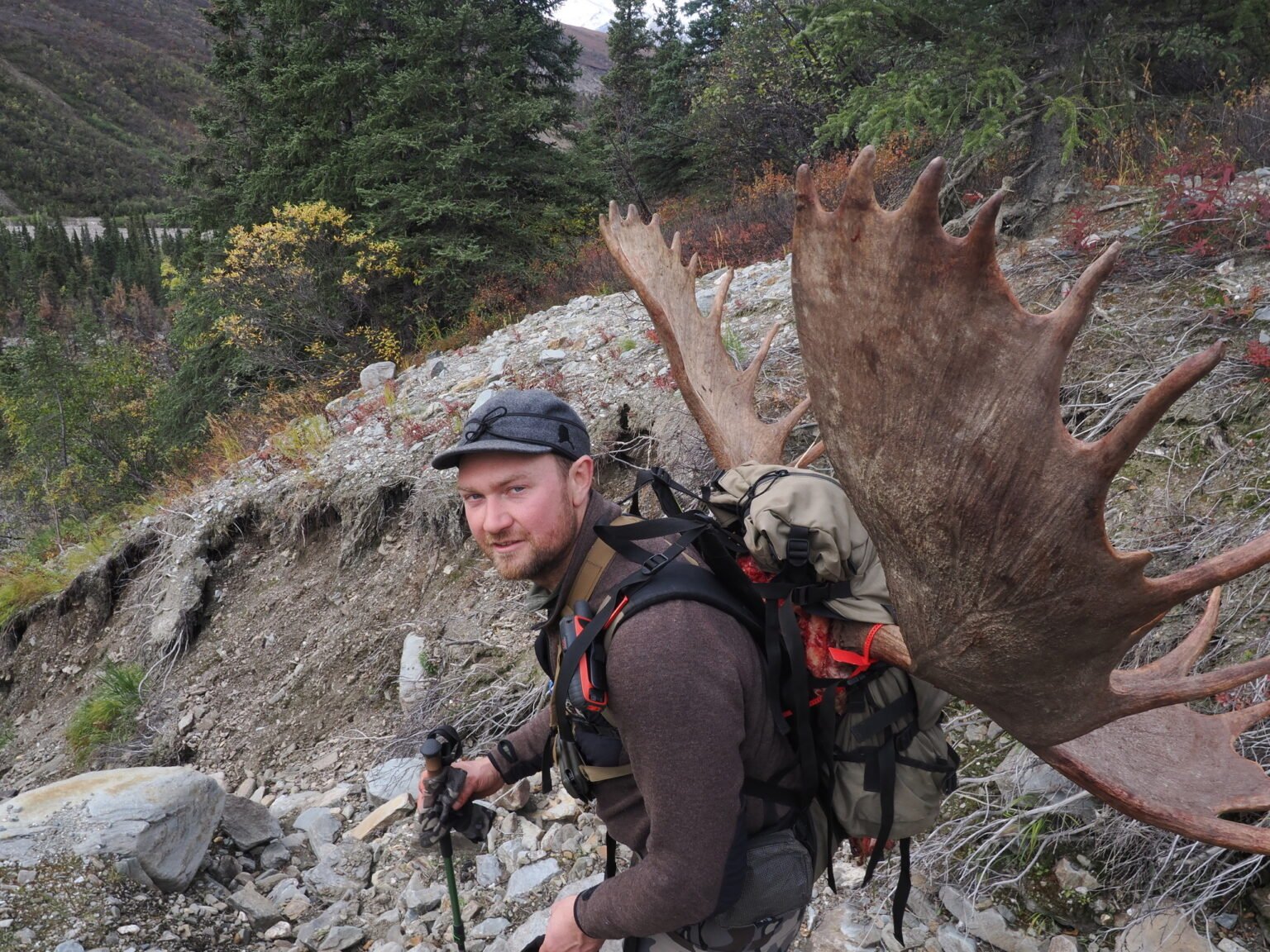
We traveled the gravel bar entirely waders due to the frequent creek crossings now required as we went back and forth across the creek to find the easiest walking route. One step at a time, we put our heads down and carried load after load. We followed the creek as it wound through the terrain, and worked until it was dark once again.
Packing by Headlamp
Looking back on this trip, I consider us to be very lucky that the weather held out for us the way it did. The rain held off, and although he nights were cold, the clear skies gave us periods of bright moonshine that helped us navigate the rocky creek bed.
With no time to waste, we had to continue packing load after load through the night. We became experts at our route, and although exhausted, we managed to find our way each time in roughly the same familiar path. It was clear, cold and still. It was actually somewhat peaceful, yet brutal at the same time. Our headlamps cut through the darkness, and allowed us to navigate quite easily.
We took frequent breaks, and the breaks became more frequent the longer we worked. We were both tired and heavily fatigued, but our conversations kept us moving forward. The mood swings started getting more extreme the longer we went. At one moment, we would be tired and grumpy, then laughing about something completely unrelated a moment later.
On one occasion, we were taking a short break on the edge of a patch of willows growing in the center of the gravel bar. We just needed to rest our backs for a few minutes, catch our breath and drink some water. Terry was slightly ahead of me when I heard him jump, spin to the side and yell out loudly – HEY!!!, with his .45 caliber pistol at full draw! I immediately grabbed for my 10mm Glock, still unaware of what was coming for us. As I spun my headlamp in Terry’s direction, I expected to see a bear heading in our direction. I was relieved when I caught a glimpse of a porcupine slowly walking away from us. The noise that startled Terry was just the porcupine leaving his tree due to our proximity to it. It sure gave both of us a good scare for a moment, especially since we were both half asleep. We were both wide awake again after that.
After many hours of packing, we finally had shuttled everything to the beginning of a section we began calling the ‘moose highway’. It was an old overflow section of the creek that was composed of mostly flat gravel, and cut off a direct path toward the trail we needed to intersect to take us directly back to our pickup location. Most importantly, the route avoided any further river crossings and allowed us to get out of our wading boots and put our much more comfortable and supportive hunting boots back on.
It was now the 17th, nearly three days since killing the bull up on the mountain side. As we looked back up the valley, the distance we covered still seemed nearly impossible.
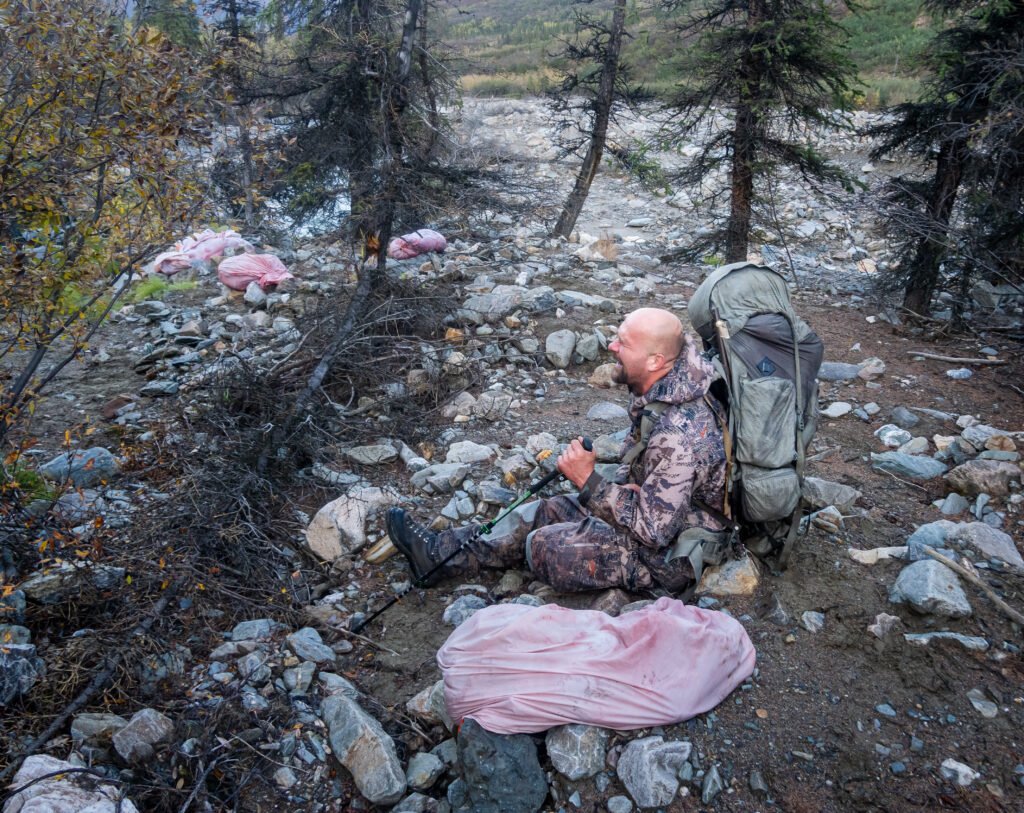
40 miles for a moose...
We packed through another night, and by the morning of the 18th it was finally our pickup day. By daybreak we made it to the airstrip with a couple loads, but still had several to go. Our first plane was scheduled to show up at 11:00. Once we sent back the majority of the meat with the first load, we planned to break down camp so we were ready when the second plane showed up for us and the remainder of our gear.
At 9:30am, an airplane started circling the airstrip. Based on my communication with them the evening prior, we weren’t expecting the plane for at least another hour. I sent a quick message to the flight desk and they confirmed the plane was for us. Unfortunately, we were not ready for pickup yet with one load still over a mile from the strip.
The plane landed on the strip. Terry was still upriver while I talked to the pilot. To make matter worse, the flight service sent a Cessna Caravan a much larger aircraft than what we requested. This wouldn’t have been a big deal, however we were still expecting two trips with the much smaller Helio. Now with everything going on this plane, we had to be ready now!
The caravan carried a load of supplies, and a farrier sent to work on one of the outfitter’s horses. Luckily for use, the farrier was going to take about an hour do his work on the horseshoes, so we had a little bit of time to spare. That gave us about an hour go get everything back to the strip.
Terry received my message and couldn’t believe it. He loaded the final 100+ lb into his pack and moved as fast as possible, even running at times to make up time. Meanwhile, the base camp we set at the strip was still fully setup. A couple other individuals were waiting at the airstrip following a float trip, and offered their help to break the base camp down with me while terry ran back with the massive final load.
Finally, at about 11:00, Terry stumbles in with the final load.
The farrier completed his work, we loaded the final load into the Caravan, and we were finally on our way. 4 days after killing the moose on the mountain with only a couple hours of sleep – the expedition, and the 40 mile pack out, was over.